
Species Descriptions
Six Flamingo Species
Detailed descriptions of each of the world’s 6 flamingo species and their distinct characteristics. All descriptions can be found in their entirety on Cornell Lab of Ornithology’s flamingo species identification pages as part of the Birds of the World catalogue. References to each are listed below.
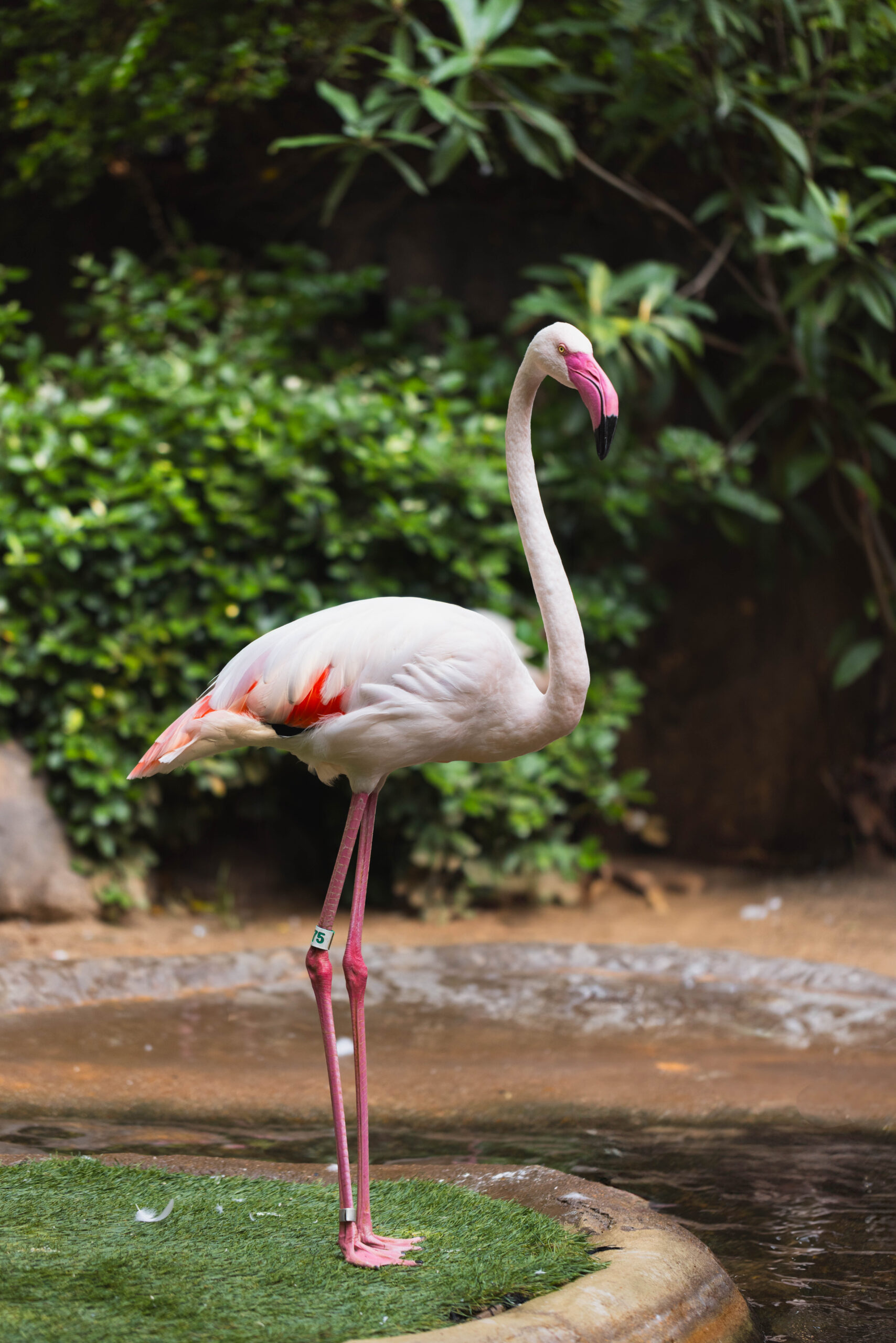
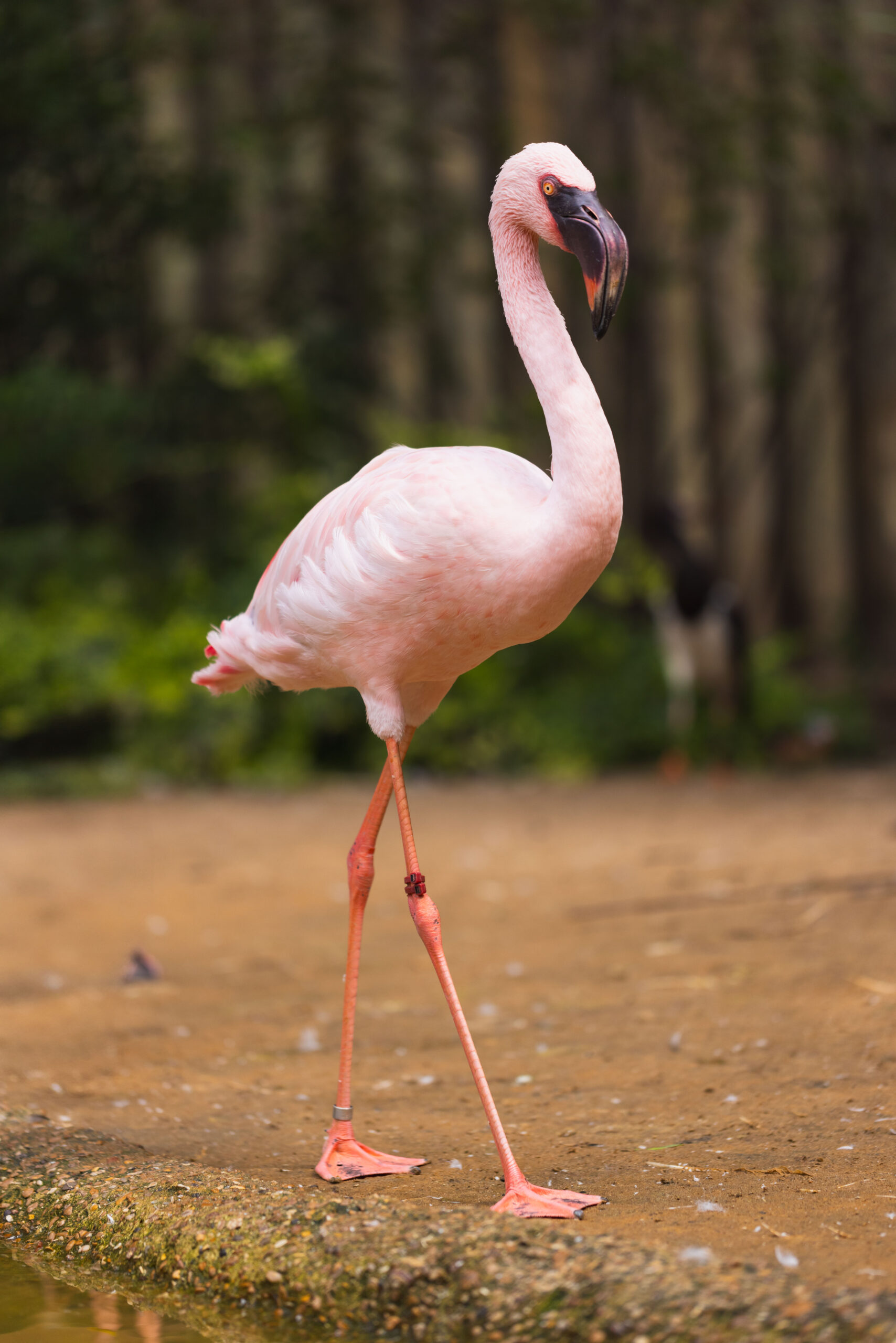
Fine Details…
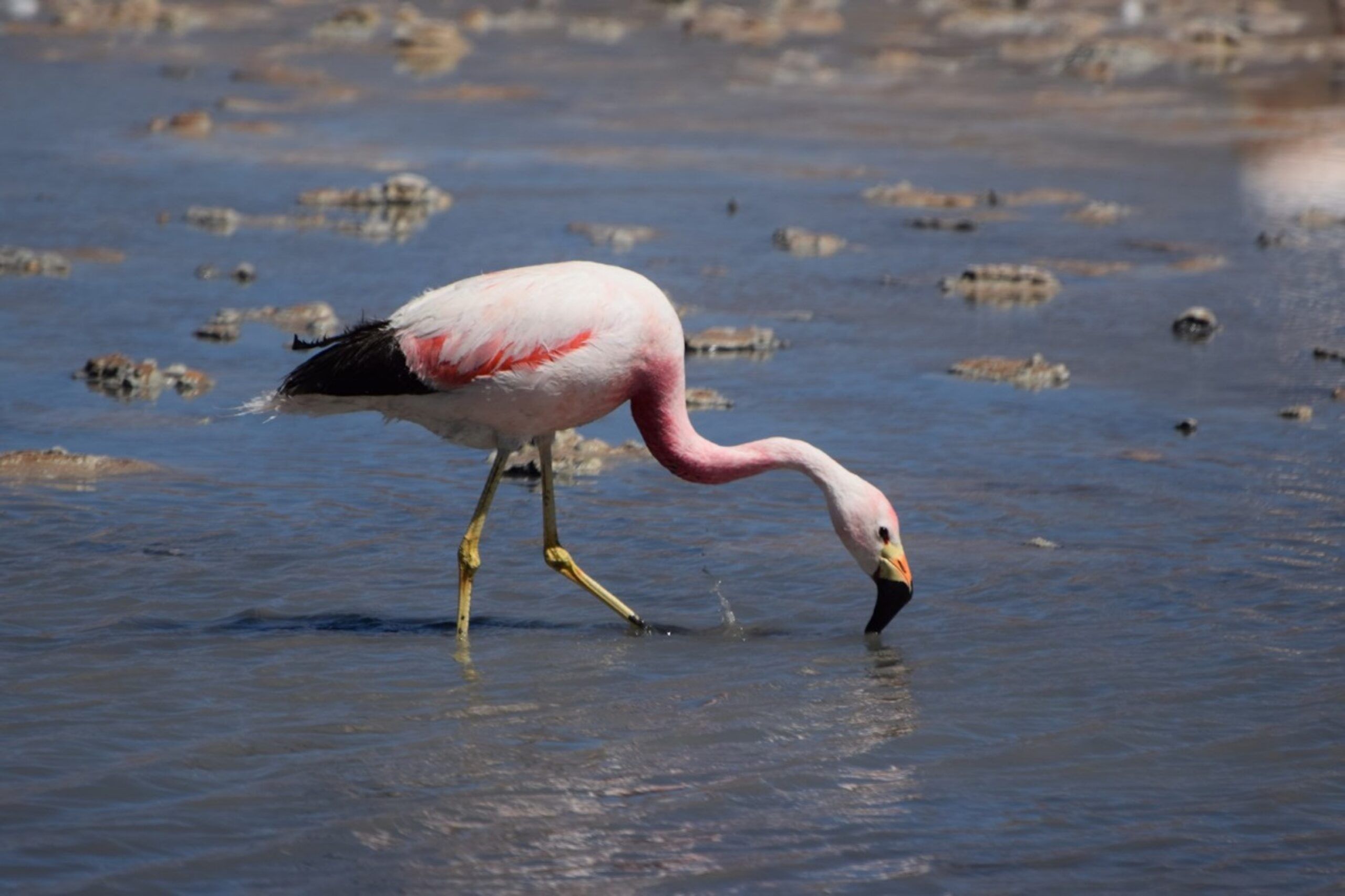
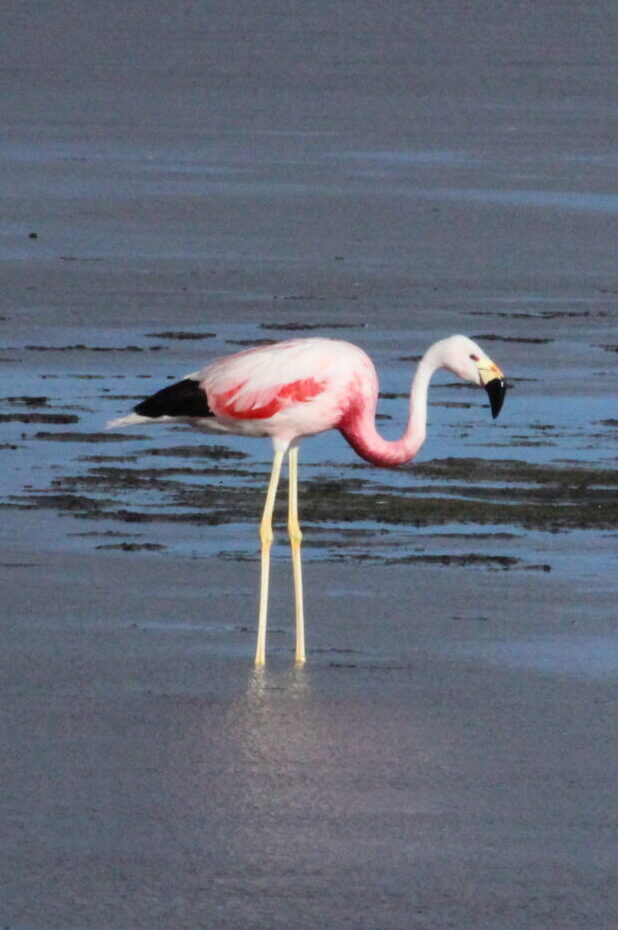
ANDEAN FLAMINGO
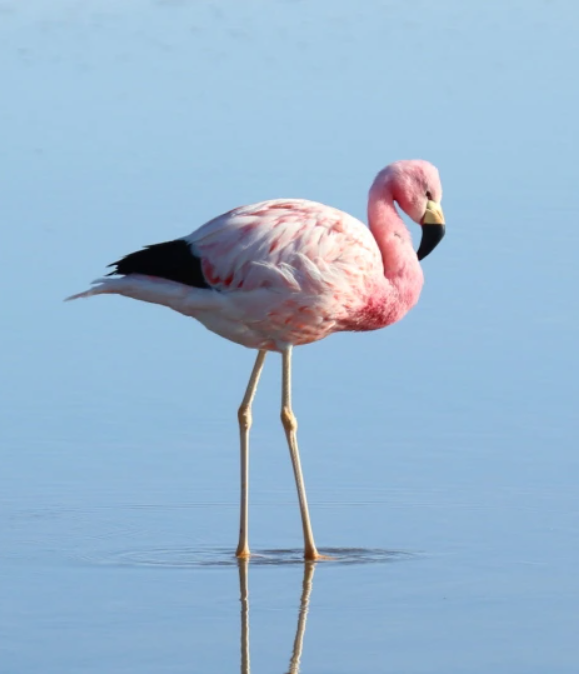
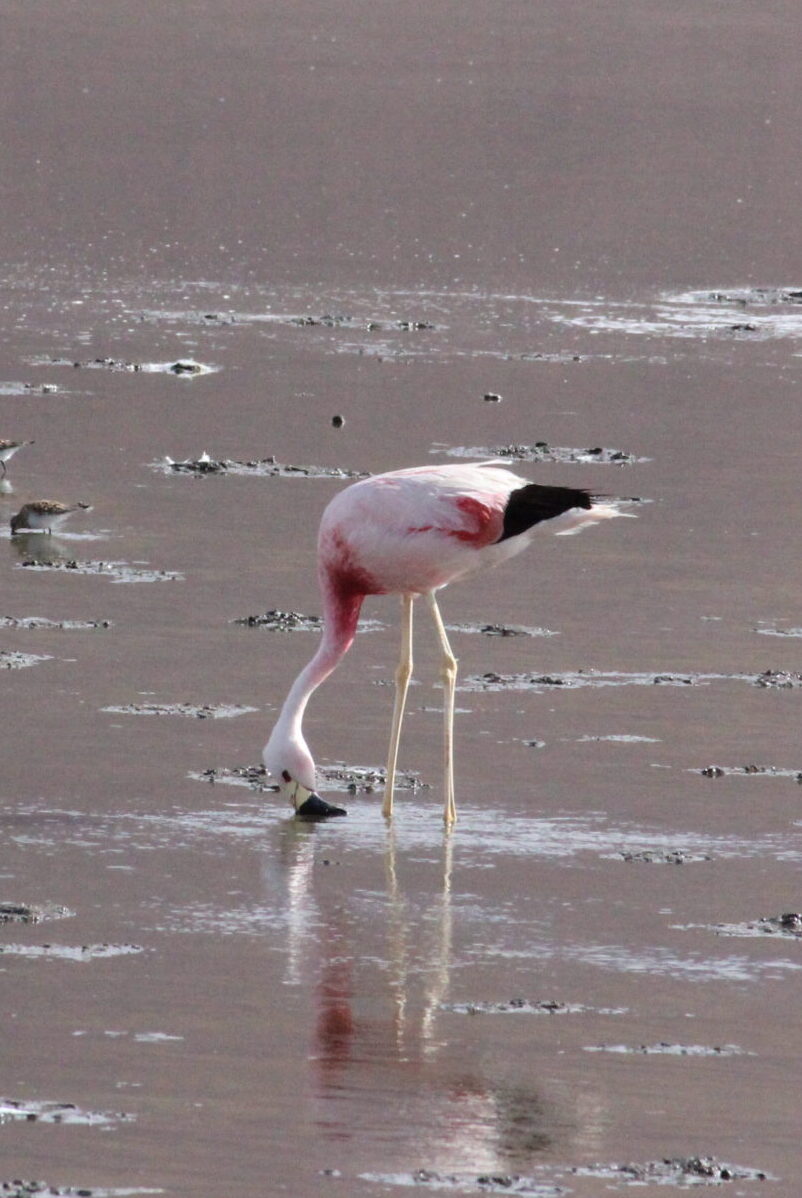
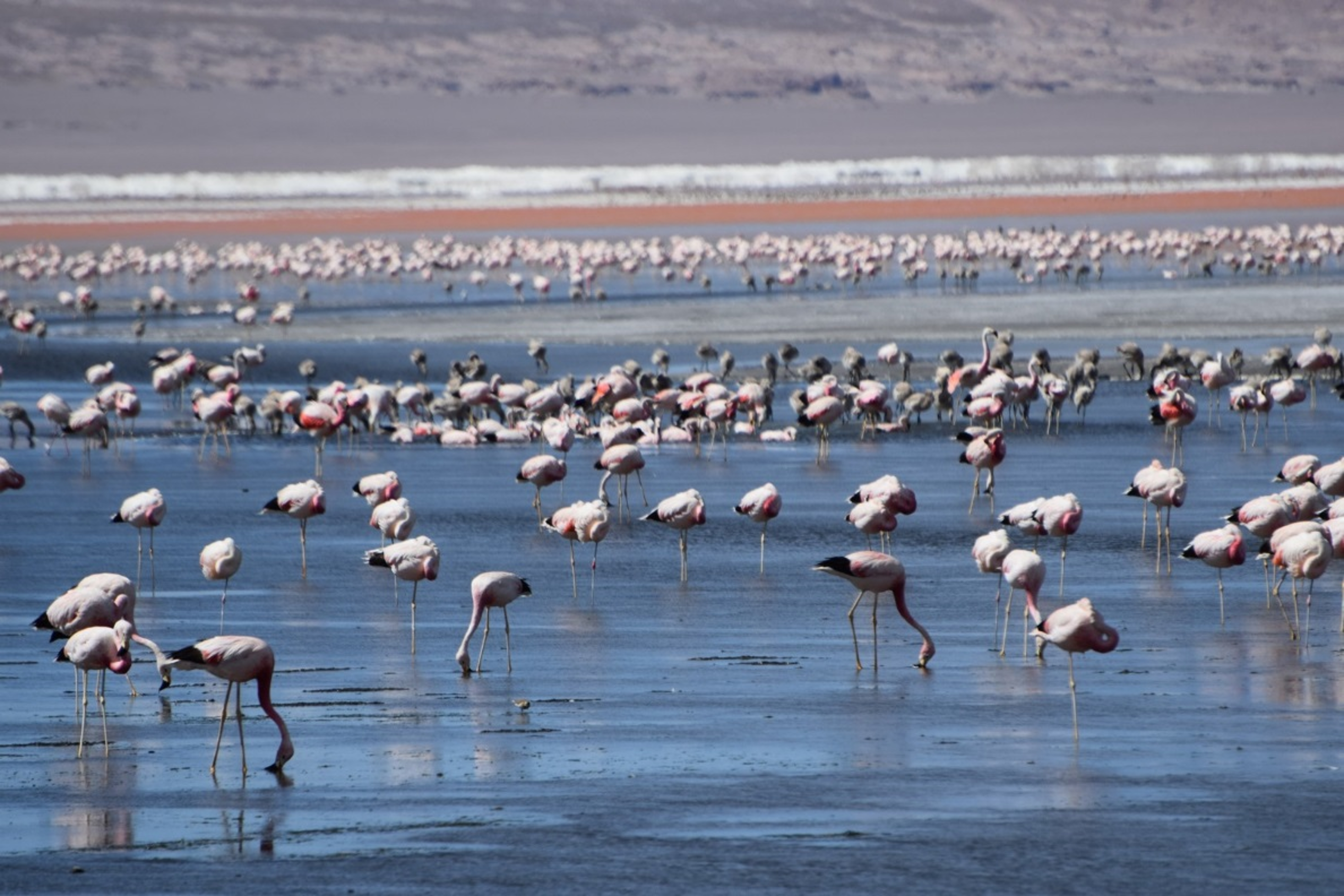
Andean Flamingo is one of the two flamingos in the genus Phoenicoparrus. These two species – Andean, and James’ Flamingo (Phoenicoparrus jamesi) – are distinguished from other flamingos (Phoenicopterus and Phoeniconaias) by their deep lower mandible, and very long filtering filaments on the maxilla. Andean Flamingo is the largest of the three flamingos of the Andes. It has yellow tarsi as an adult, and a large black triangle on the rear parts that helps to separate it from the other species. It breeds colonially on high Andean alkaline lakes in Peru, Bolivia, Chile, and Argentina, most above 3000 m in elevation. The species is largely restricted to similar habitats in the nonbreeding period although some venture to the lowlands of the Argentine Chaco, spending time at Laguna Mar Chiquita. Breeding rates are consistently low, and it is estimated that the species suffered a population decline between the 1970s and 1990s, with present population estimates of only 38,000-39,000 individuals, making this the rarest species of flamingo. Accordingly, Andean Flamingo is listed as Vulnerable on the IUCN Red List.
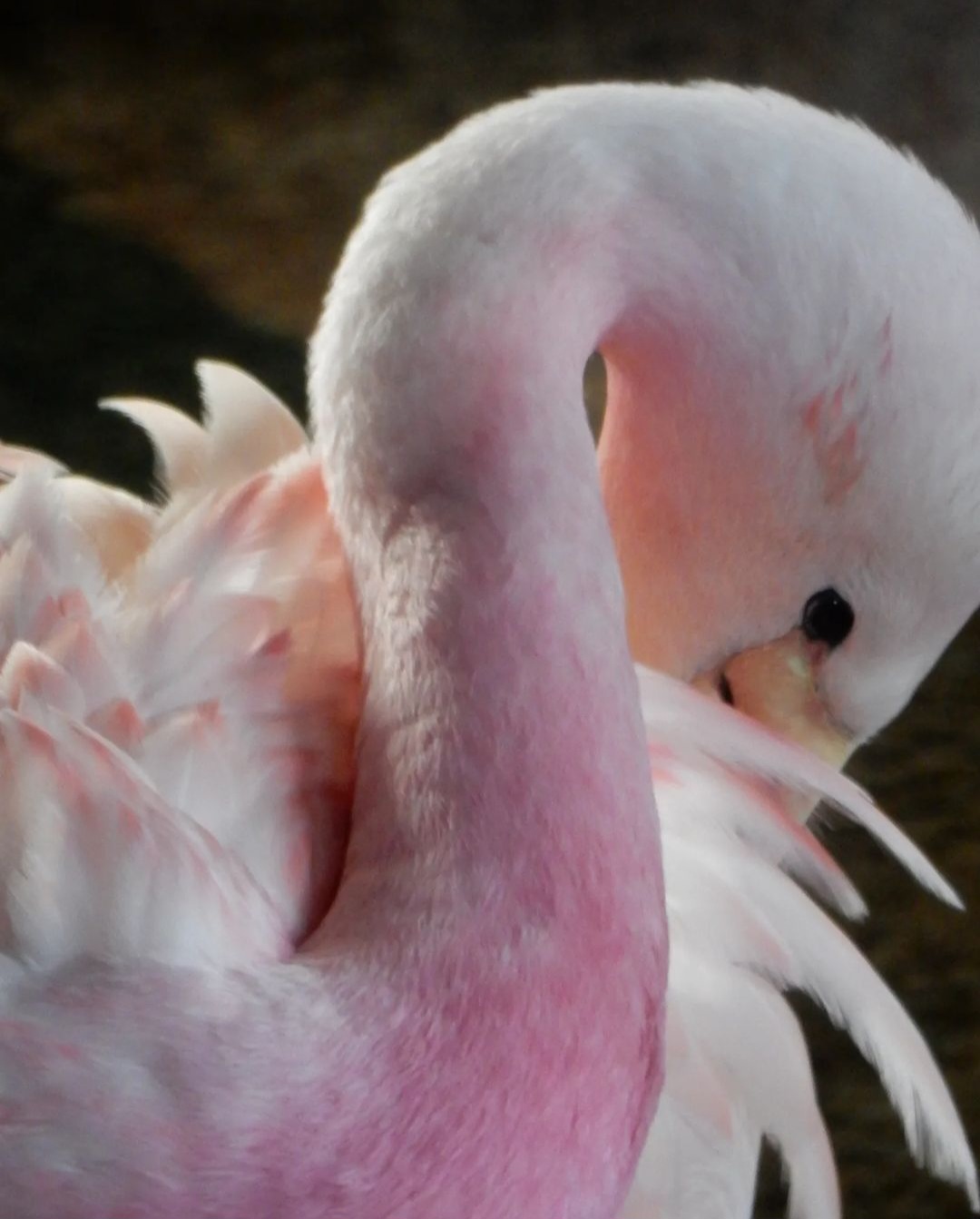
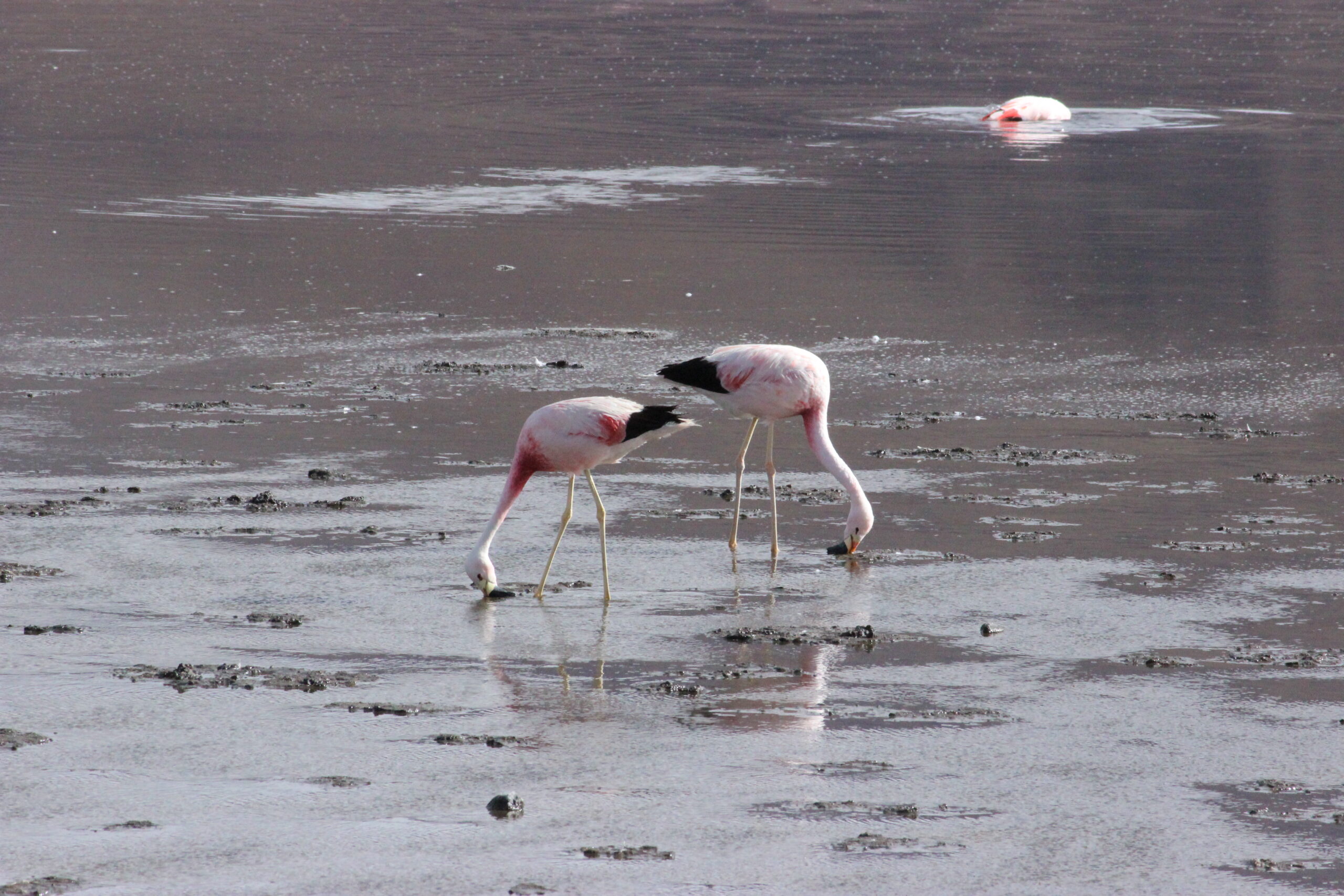
Field Identification: Andean Flamingo is the largest flamingo in the Andes. The base of the Andean Flamingo’s neck and chest are covered in bright pink feathers. Its coverts are also bright pink, while its other feathers are pale pink. Its bill is pale yellow near the skull, but black for the majority of its length, and curves downward. Its lower mandible is less apparent than those of the genus Phoenicopterus.
Similar Species: Andean Flamingo overlaps in distribution with two other species of flamingo: Chilean Flamingo (Phoenicopterus chilensis) and James’ Flamingo (Phoenicoparrus jamesi). Andean Flamingo is the largest of the three species. It has yellow legs, while the Chilean Flamingo has grayish legs and pink joints, and James’s Flamingo has brick red legs. Andean Flamingo is best separated from both flamingos it overlaps with by its black primary and tertial feathers, which when not in flight, appear as a large black triangle on the back. While both Chilean and James’s flamingo also have black primaries; they are largely covered by elongated pink feathers on the back. James’s Flamingo is best separated from Andean Flamingo (and Chilean Flamingo) by its largely yellow bill; only the base of the bill is yellow in Andean.
Related Species: A recent study that reconstructed the phylogeny of flamingos using DNA sequence data found that Andean Flamingo is sister to James’s Flamingo, and together constitute the genus Phoenicoparrus. These two species appear to be sister to the OldWorld Lesser Flamingo (Phoeniconaias minor). These three species form a well-supported clade that is sister to the remaining three species of flamingo in the genus Phoenicopterus.
Distribution: Andean Flamingo occurs in the high Andes of west central South America, in Peru, Chile, Bolivia, and Argentina.
Breeding Range: Breeding is concentrated in northern Chile, extreme southwestern Bolivia, and northwestern Argentina, at elevations from 3,000 m to above 4,000 m; surveys in the austral summer of 1997 and 1998, for example, found that half of the population was breeding at just five sites, in northern Chile and adjacent Bolivia and Argentina.
Nonbreeding Range: During the nonbreeding season, some birds remain around the same wetlands where they bred, but others move to lower elevation wetlands and lakes, including east to the central plains of Argentina, and also north through the Andes to southern Peru (north to Salinas, Arequipa, and Parinacocha, Ayacucho).
Movements and Migration: While some populations of Andean Flamingo appear sedentary, moving to portions of the lakes where they breed that have hot springs and thus do not freeze during the winter, some populations do appear migratory. Winter surveys in Chile and Argentina found that some portion of the population shifted to lower elevation wetlands, although many were still located in the High Andes and Puna environments, though some moved to lower elevations on the central plains of Argentina, including the low elevation salt lake Mar Chiquita. However, the migratory patterns of Andean Flamingo are still incompletely known, and winter surveys have consistently found fewer individuals than during breeding season surveys, suggesting some are moving to places that remain unknown.
Microhabitat for Foraging: The Andean Flamingo forages in shallow, salty waters for resources. Within a lake, it forages near the bottom at the benthic interface, and so typically forage in water no deeper than 1 m, although in one study most feeding was limited to water between 2-50 cm deep. At one lake where three species of flamingo, including Andean, were seen foraging, the water temperature was 12ºC and had a pH between 8 and 9.
Food Capture and Consumption: The Andean Flamingo is a filter feeder with a primarily herbivorous diet. It showcases the most variable foraging pattern compared to that of the Chilean and James’s flamingos. Foraging patterns are dependent on the species it is associating with. When Andean is found together with James’s Flamingo, it forages in shallow areas around the edges of a lake, but when it is found with Chilean Flamingo, then it forages in deeper water. When foraging alone, Andean Flamingos uses moderate and deep water for foraging.
Johnson et al. described foraging movements in Andean Flamingo in the following way: “The head and neck are submerged until the bill rests on the bottom; the bill is then drawn toward the feet with a slight swinging motion, followed, in some cases, by the bird stepping backward and continuing the motion without raising its head.” At one study site in Bolivia, when Andean Flamingos were excluded from portions of the lake, there was a significant difference in the microbenthic community, with diatoms, amoebas, ciliates, and nematodes all significantly more common in areas flamingos were excluded from, suggesting that flamingos play an important role in lake community.
While all flamingos are filter feeders, the structure of their bills differs between species, possibly allowing for some partitioning of food items by size and allowing three species to co-occur. In Andean Flamingo, the lamellae of the bill likely act not only as filters to prevent certain items into the bill, but also as a barrier to prevent the escape of food items once in the bill. The distance between outer submarginal lamellae are about 1,000 µm, while the inner submarginal lamellae are mostly between 105-106 µm.
Diet: Compared to the Chilean Flamingo, Andean Flamingo has an omnivores diet of diatoms, insects, and small crustacean larvae. Diatoms consumed by Andean Flamingos are typically 61-120 µm in size. Stomach content analysis from specimens (n = 3) also found diatom skeletons and little else.
Vocalizations: As in other Flamingos, most vocalizations tend to be quiet and heard most often around nesting colonies. The main vocalizations of this species tend to be higher-pitched and clearer than other Flamingos and are readily distinguishable from James’s (Phoenicoparrus jamesi) and Chilean Flamingos (Phoenicopterus chilensis).
Vocalizations
Peep- A surprisingly high-pitched (c 2 kHz), short (c 0.1-0.2s), clear note that sounds rather Passerine-like. Most often given in a quick series that slightly descends, but sometimes also singly. Among the more common vocalizations of this species in online collections. May be what is described as a “a loud vibrating call” in Fjeldså and Krabbe.
Quack– A brief, rough nasal quack or honk-like note that can be given individually or in series. Lower-pitched and shorter in duration than the analogous call in Chilean Flamingo, but slightly higher-pitched than in James’s Flamingo. Often heard in flight.
Chuckle– A quiet, conversational call made up of short, low-pitched quack-like notes. Lower-pitched and less nasal than the Quack call, and typically given in a faster series. The analogous vocalization in James’s Flamingo heard from foraging birds, but no information for the present species. Quality of the faster examples somewhat reminiscent of some calls made by foraging Mallards.
Physical Interactions: In their study of social behaviors of captive Andean Flamingos, Lindgren and Pickering described two primary aggressive displays that birds would use towards conspecifics. The Neck Swaying display involved swaying its horizontally-held neck side-to-side, likely in an attempt to ward off an approaching flamingo. The second aggressive display described by Lindgren and Pickering was Bumping, which, as the name implies, involved one flamingo bumping into another in an attempt to get them to move away. During the breeding season neighboring flamingos squabble with each other and come close to drawing blood.
Behaviors: Andean Flamingos are extremely social and have a series of ritualized displays which may serve not only to strengthen pair bonds but also possibly to synchronize breeding among the colony In a study of captive birds, Lindgren and Pickering describe the ritualized displays of Andean Flamingos, which collectively fall into three categories: 1) Ritualized Head Displays, 2) Ritualized Wing Displays, and 3) Locomotor Displays. A fourth display category is discussed under Agonistic Behavior.
Lindgren and Pickering describe five Ritualized Head Displays: Head Flagging, Head Shake Preen, Twist Preen, Broken Neck, and Alert. Many of these displays are used together with other displays. For example, Head Flagging, Twist Preen, and Broken Neck displays were often used during the Marching Display.
Conservation: The IUCN Red List conservation status of Andean Flamingo is assessed as Vulnerable. Although the population trend is thought to be stable, the population is believed to have declined significantly in recent decades. Global population estimates from the 1970s and 1980s were of 50,000 to 100,000, or even 150,000 individuals, but these early figures later were judged to have been only “very crude estimates”, perhaps casting some doubt on the severity of the population decline. A comprehensive survey in January 1997 detected only 33,927 Andean Flamingos, and this number seems to have remained stable in following years, as a census in 2010 tallied 38,675 individuals.
Roberts, K. G., J. C. Patton, Z. A. Mahmood, B. D. Alarcon, J. del Hoyo, P. F. D. Boesman, and E. F. J. Garcia (2020). Andean Flamingo (Phoenicoparrus andinus), version 2.0. In Birds of the World (T. S. Schulenberg, B. K. Keeney, and S. M. Billerman, Editors). Cornell Lab of Ornithology, Ithaca, NY, USA. https://doi.org/10.2173/bow.andfla2.02
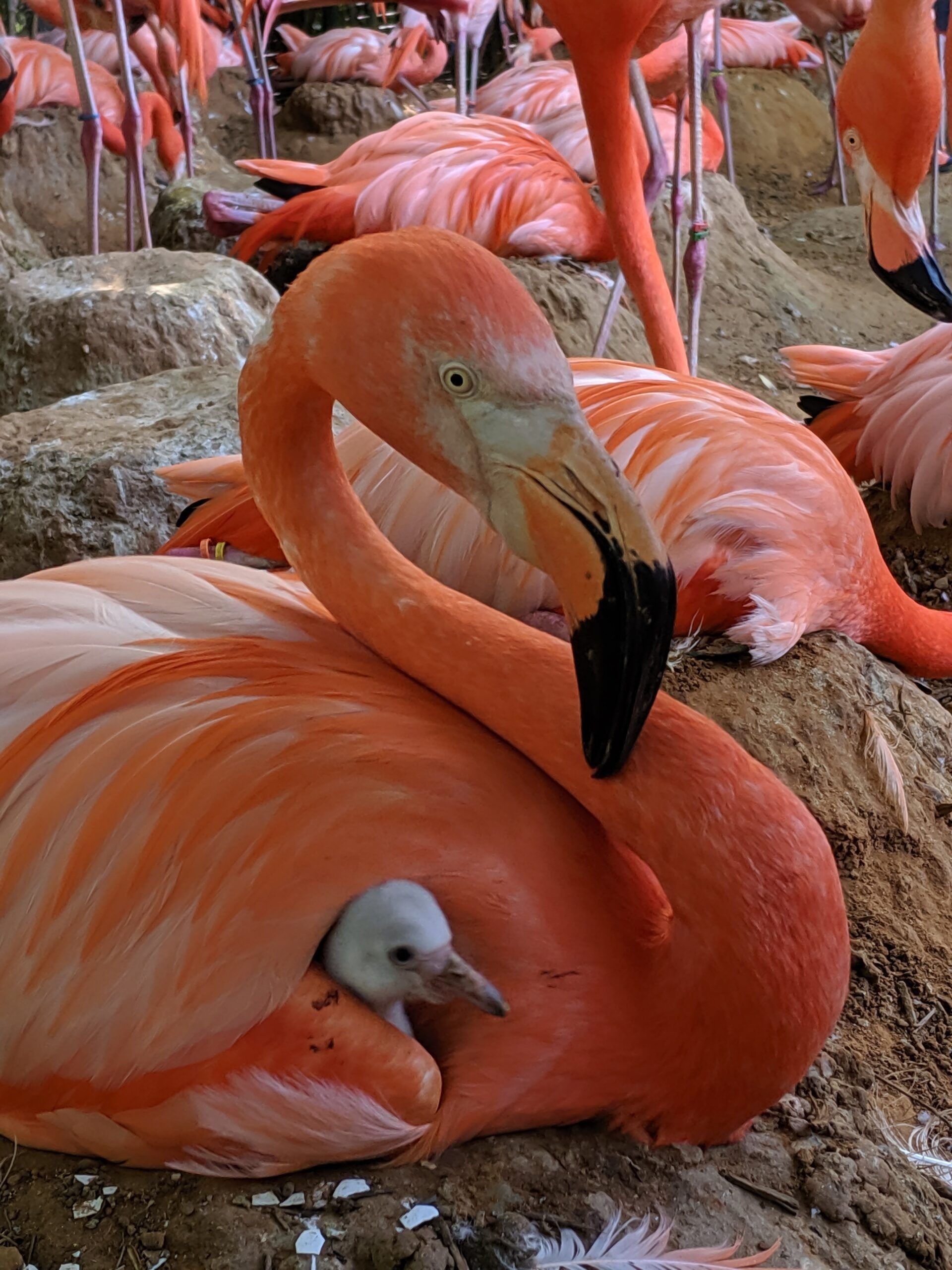
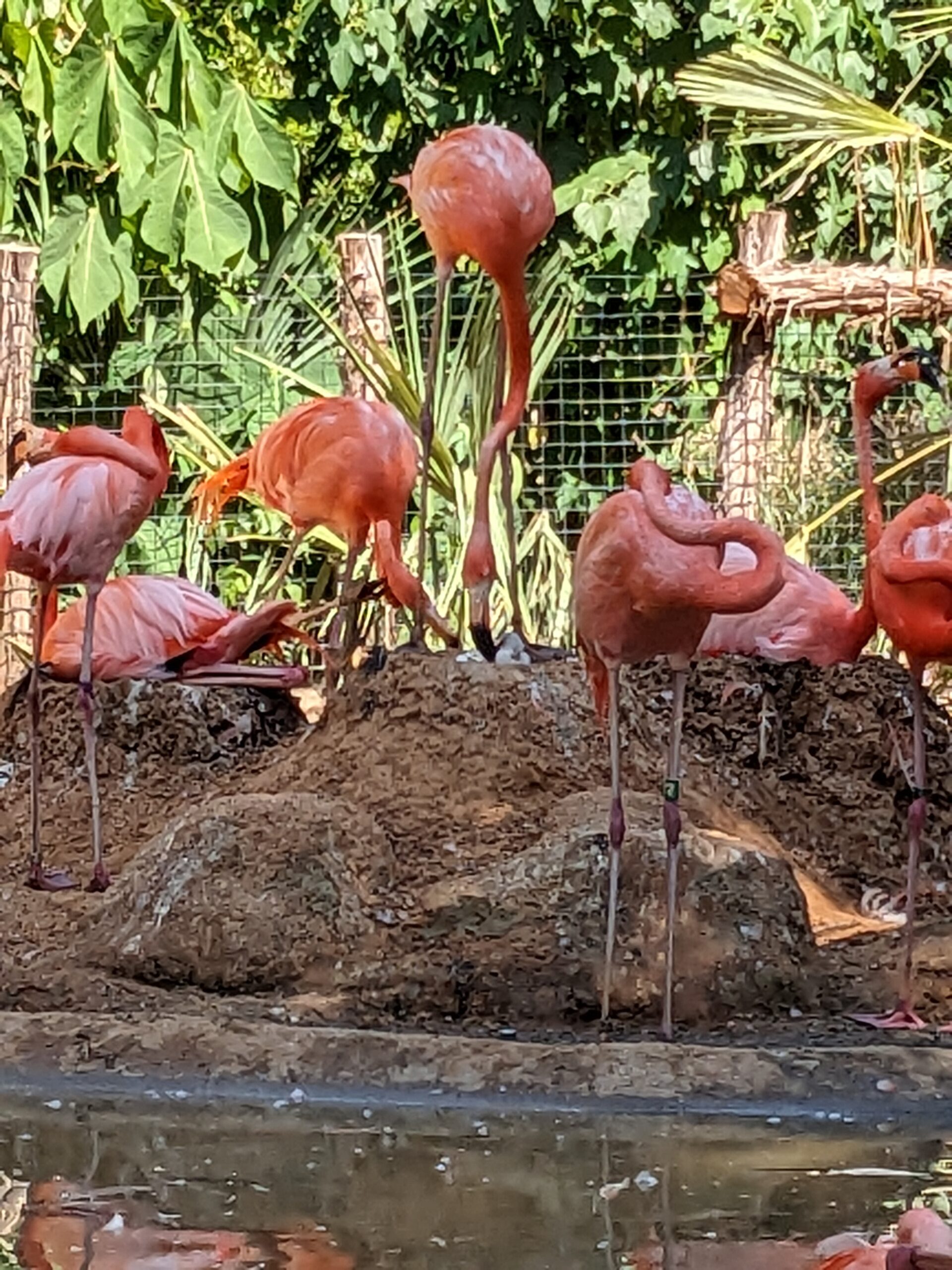
CARIBBEAN (AMERICAN) FLAMINGO
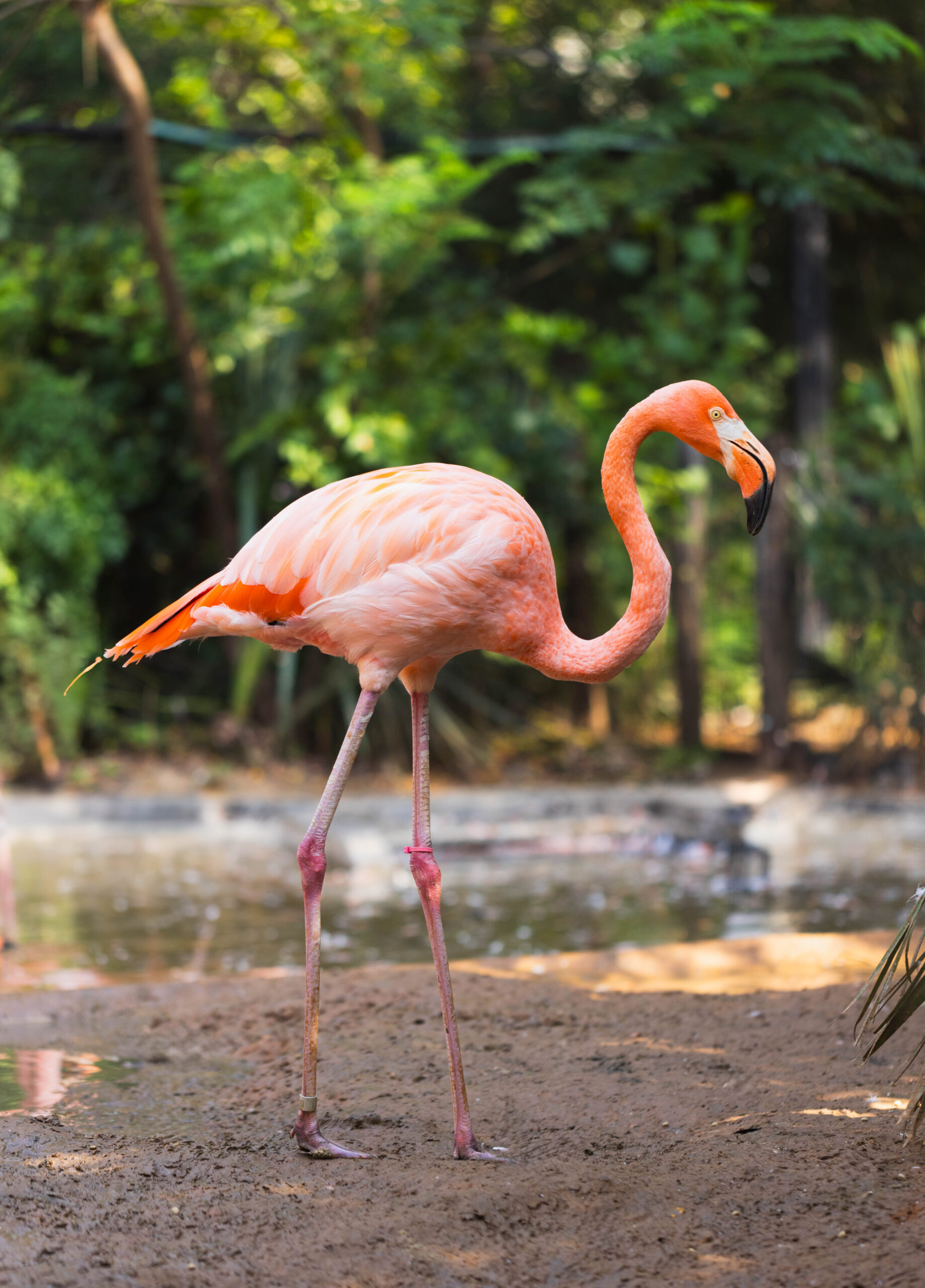
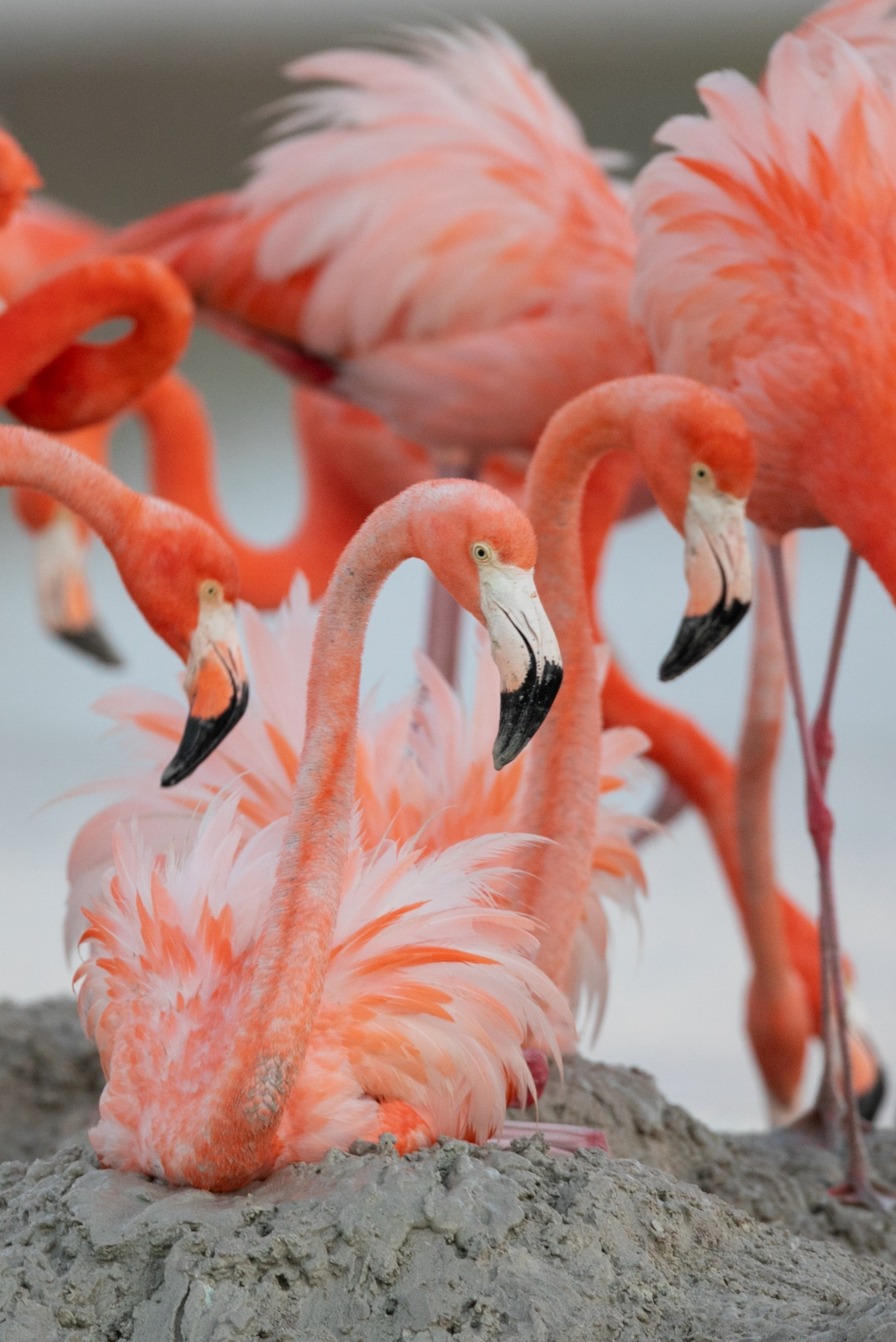
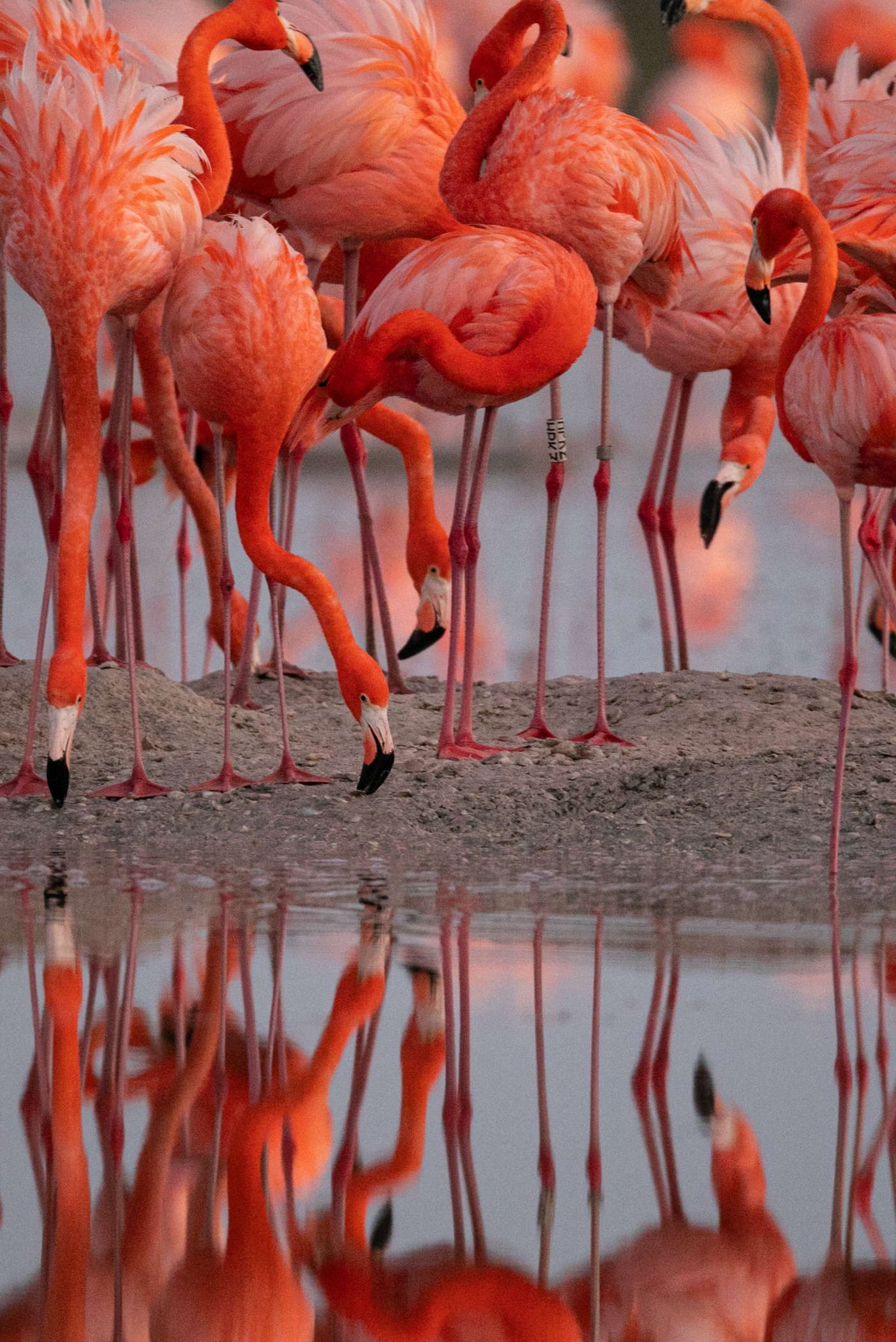
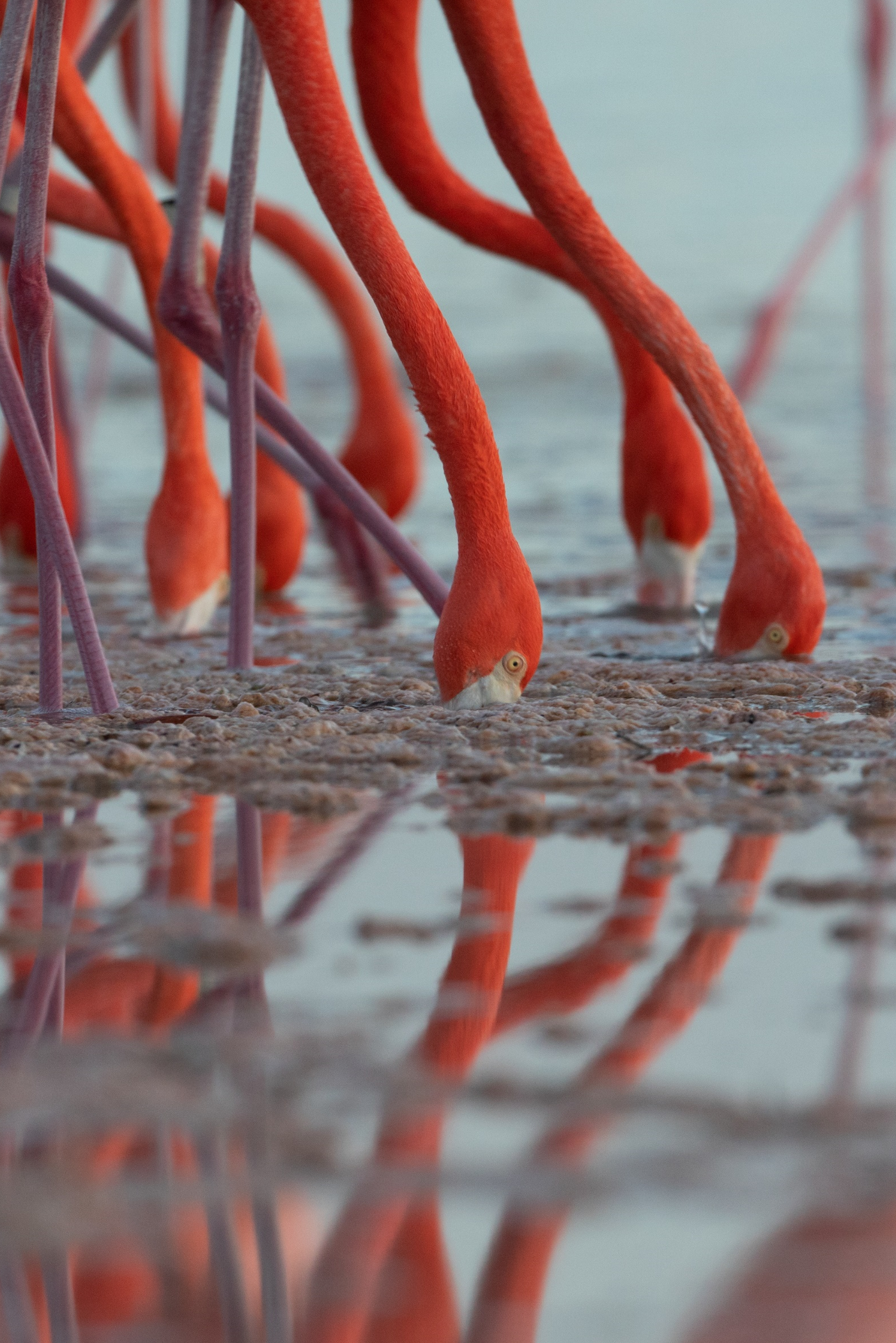
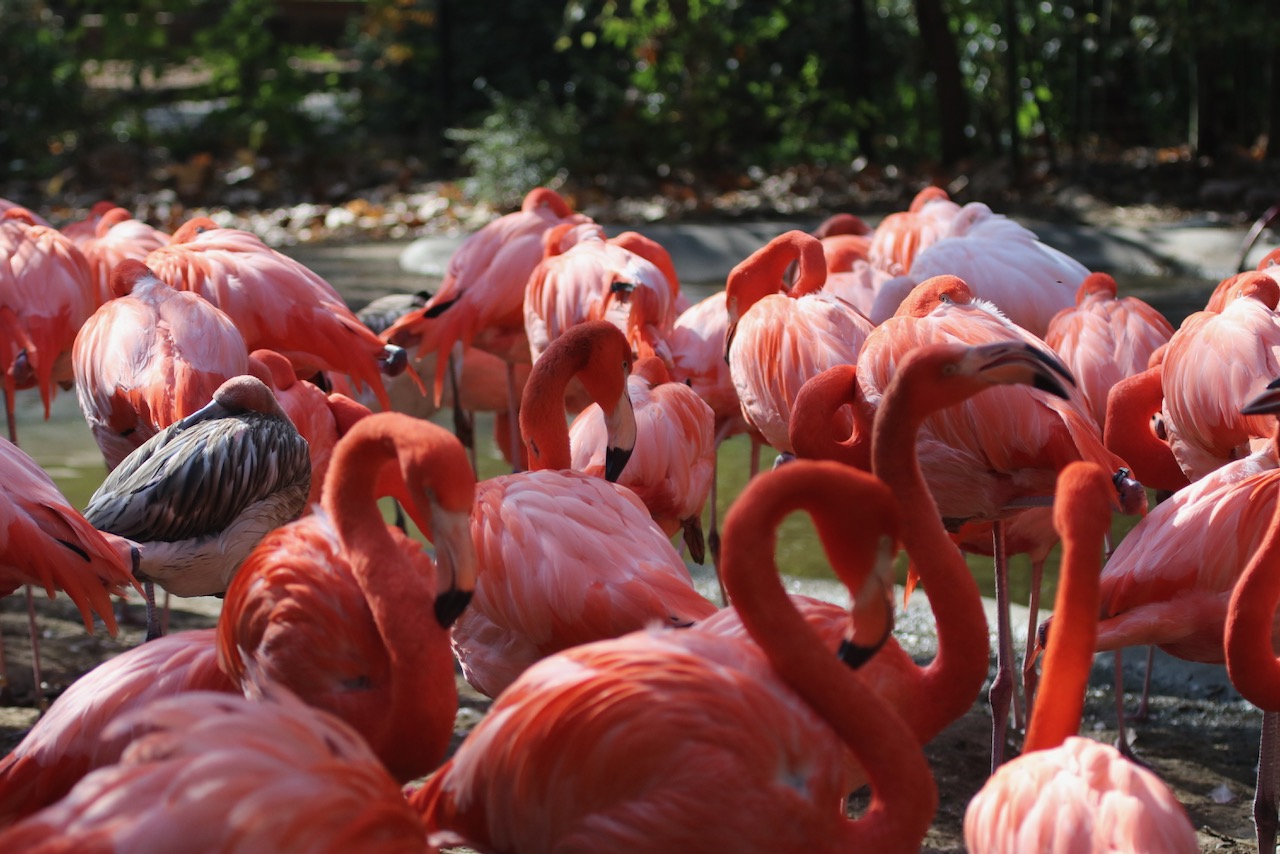
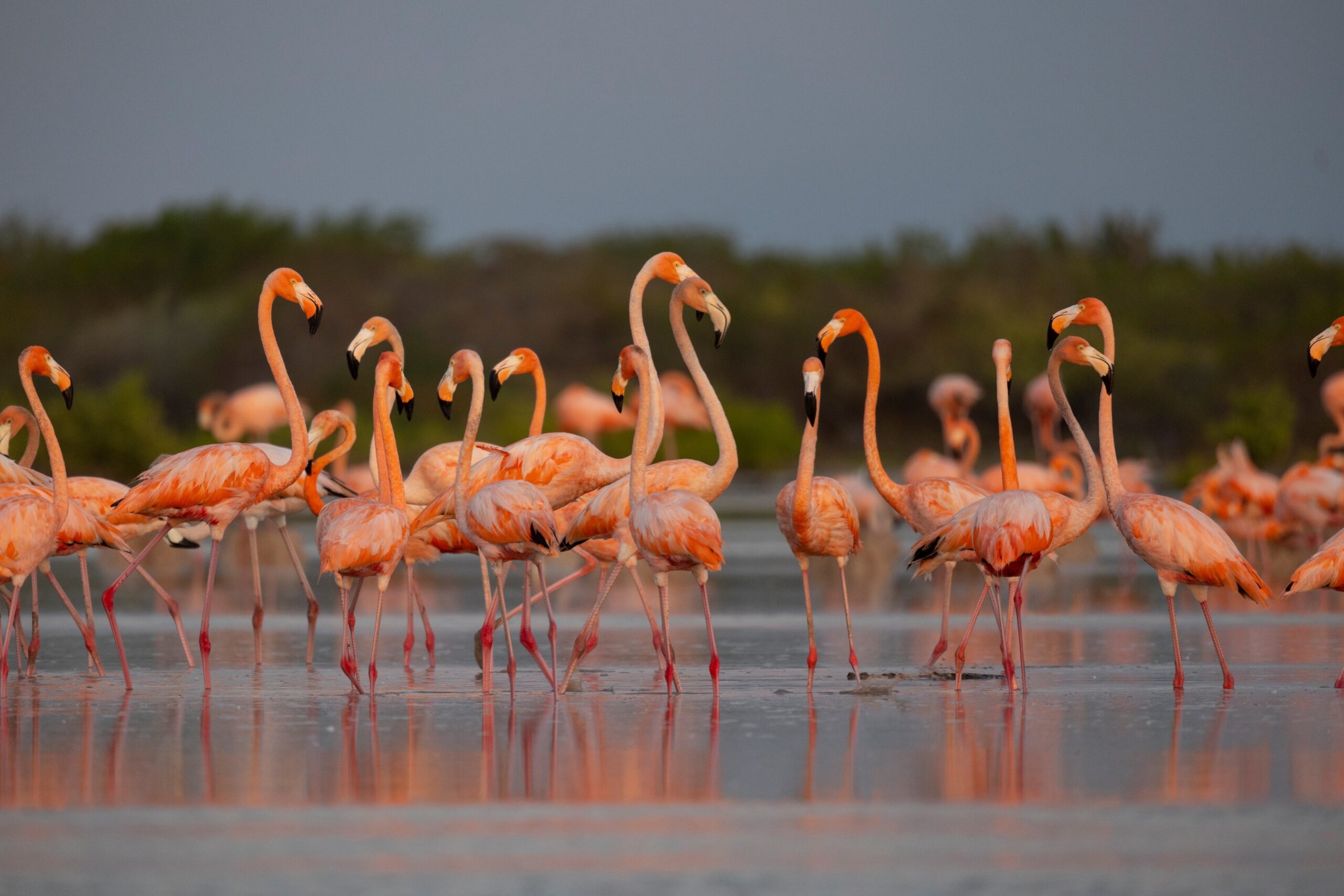
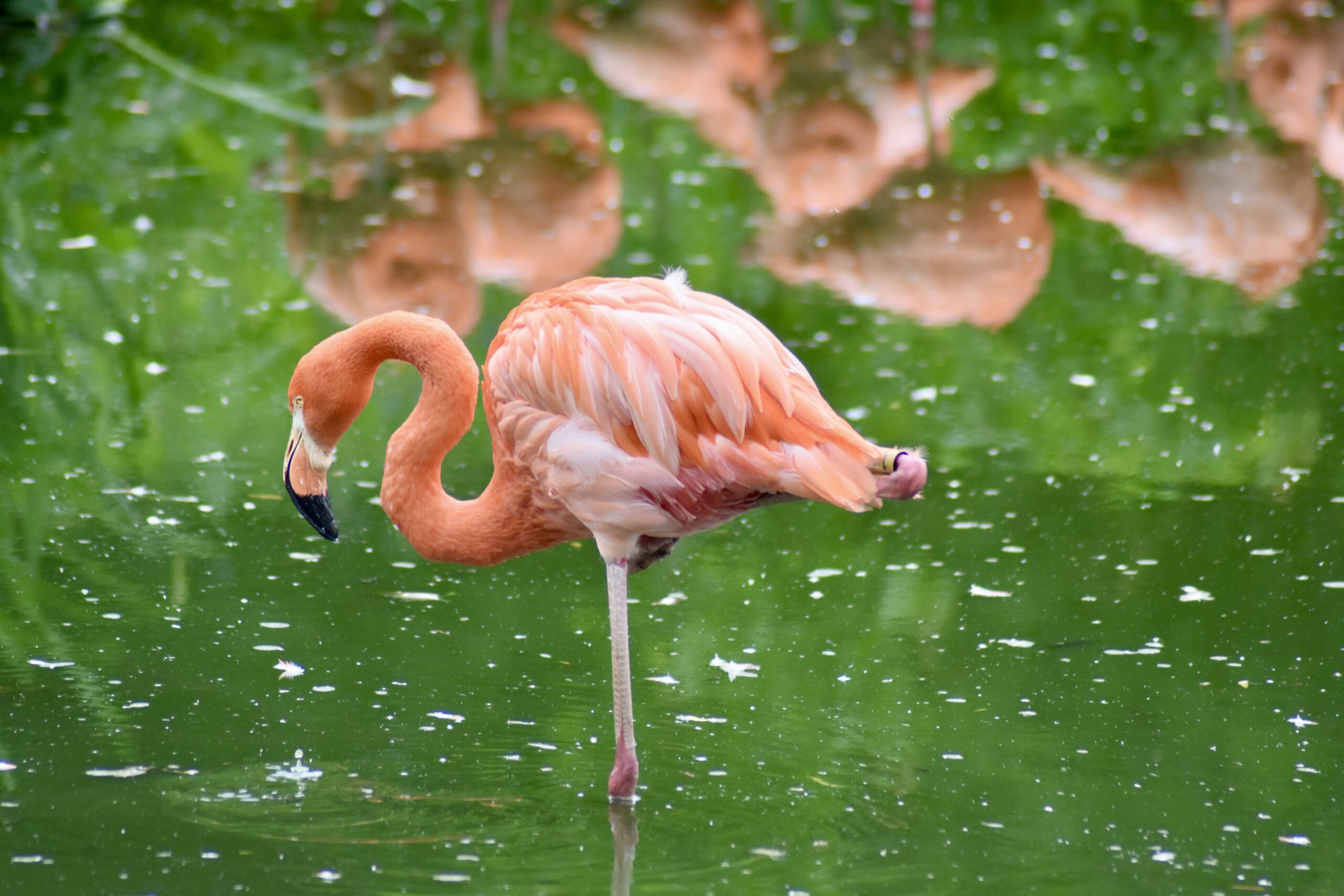
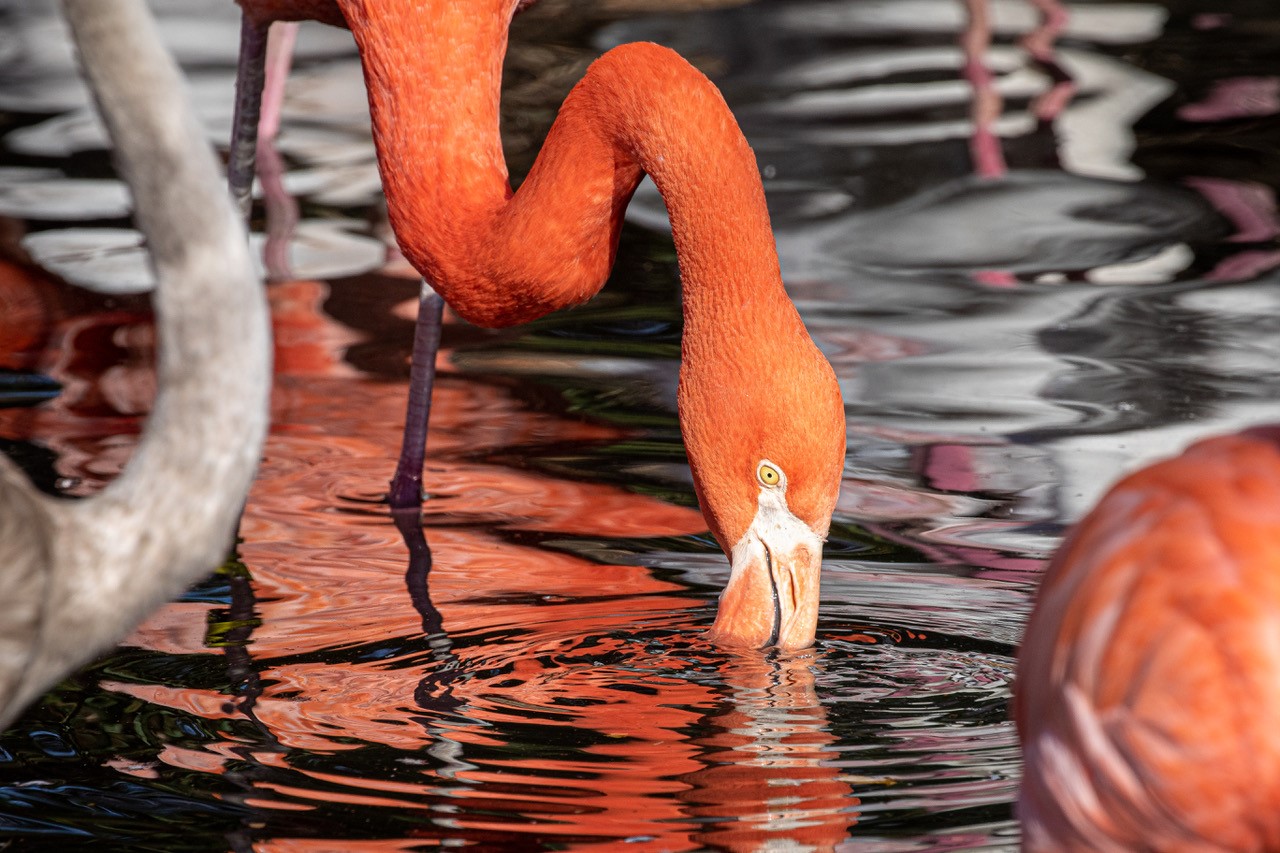
The American Flamingo is the only flamingo distributed through the Caribbean Sea, the northern coasts of South America, and on the Galapagos. It was formerly considered conspecific with the Greater Flamingo (Phoenicopterus roseus) of the Old World. Like other flamingos, it feeds in saline and brackish lagoons by straining water through the lamellae on its unique bill and swallowing the invertebrate organisms trapped inside. The American tends to feed somewhat deeper than other flamingos, with the head and often much of the neck submerged. While most populations build mud nests in large colonies on mudflats or islands, the birds on the Galapagos nest on piles of stones and debris in small clusters on bare, rocky islands.
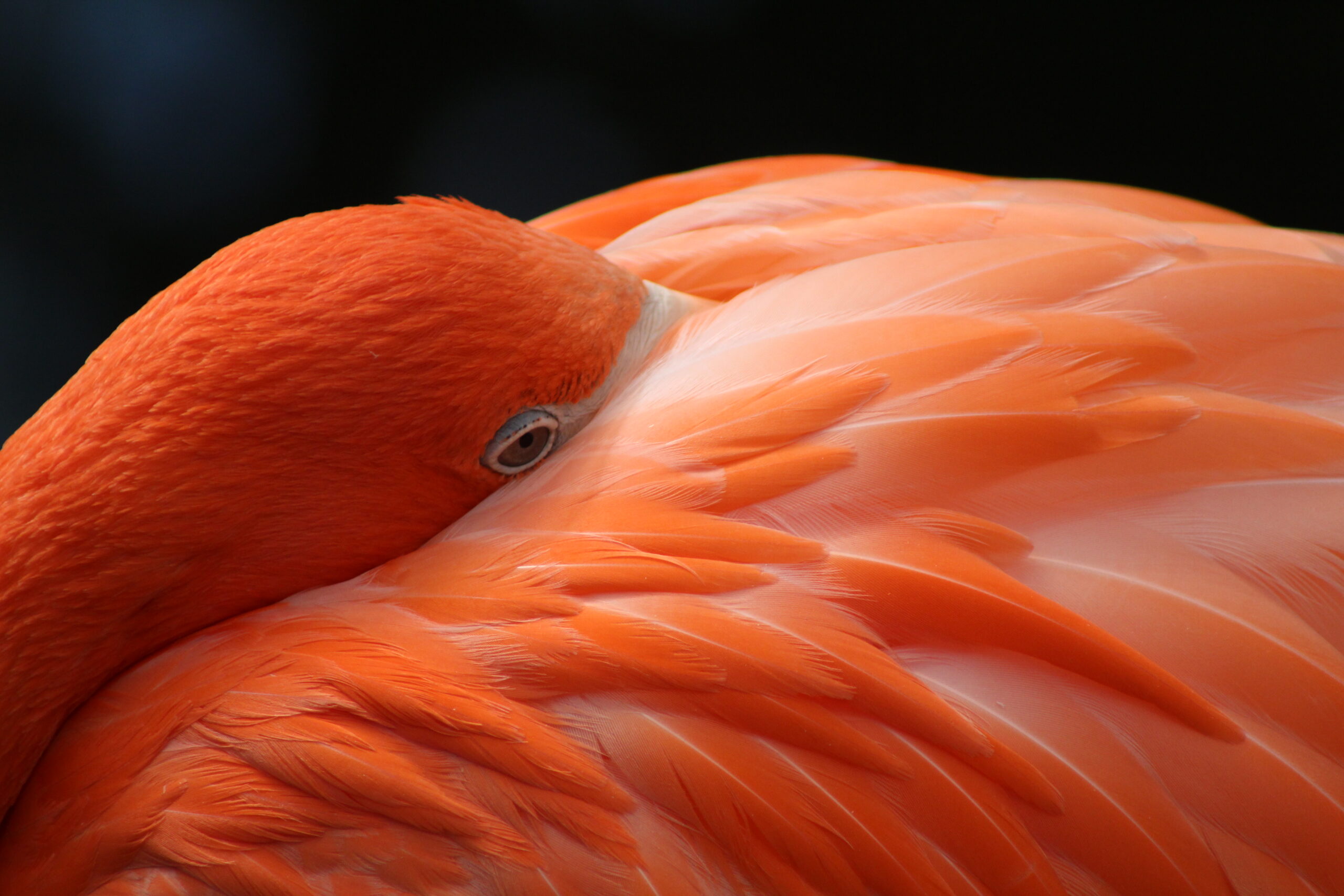
Field Identification: 120–145 cm; 2100–4100 g; wingspan 140–165 cm. Much brighter colored than greater Flamingo, adult has a pinkish-red head, neck and body plumage. Female up to 20% smaller and shorter-legged. Juvenile grey-brown with some pink in underparts, wings and tail; legs, feet and bill mainly brown. Variable subadult plumages video during first three years or so. The isolated Galápagos population differs genetically from that in the Caribbean. Galápagos birds are also smaller, largely due to shorter tarsus length, and lay smaller eggs than Caribbean populations
Systematic History: Previously considered conspecific with P. roseus, but they are now generally accepted to be two distinct species. P. ruber differs in its pinkish-red, not pinkish-white, head, neck and body plumage (4); white-based pinkish-red vs all-pink bill (3); more black around tip of bill (1). Birds of Galapagos sometimes separated as race glyphorhynchus. Monotypic.
Distribution: Caribbean; isolated population in Galapagos Is.
Movement: Partially migratory and highly dispersive. Some southward post-breeding movement reported in northern populations. There were 27 recoveries in Cuba during 1966–2000 of birds ringed as juveniles elsewhere: 22 from the Bahamas and five from Yucatán, Mexico. Daily movements of breeding birds in search of food have been reported in some years between colony on Bonaire I, Netherlands Overseas Territory, and Venezuela, a distance of some 90 km. A record of 140 flying N in Dec 2008 in Bolívar state, SE Venezuela, was unprecedented for S of the country. The small Galápagos population is sedentary.
Diet and Foraging: Relatively varied diet. Animal food consists of aquatic invertebrates, e.g. crustaceans (Artemia, Gammarus, copepods), molluscs (Cerithidea, Cerithium, Paludestrina, Neritina, Gemma, Macoma), annelids (Nereis) and insects, including larvae or chrysalids of Diptera (Ephydra, Chironomus, Thinophilus) and corixids (Sigaria, Micronecta); plant matter consists largely of seeds or stolons of marsh grasses (Ruppia, Scirpus, Juncus, Cyperus), also algae, diatoms and decaying leaves. Occasionally takes adult insects, e.g. waterbeetles (Coleoptera) or ants (Formicoidae); also crabs (Dotilla) and perhaps small fish (Cyprinodon). Sometimes ingests mud, in order to extract organic matter, especially bacteria. Normally feeds with head, and often most of neck, completely submerged, while walking along steadily; only occasionally filters on surface, in style of P. minor. Also treads ground to loosen surface and bring out prey.
Sounds and Vocalizations: Commonest call (both perched and in flight) is a goose-like double honk “ka-hank” or “ka-rrak”, uttered with a tonal quality ranging from nasal trumpeting to hoarse barking. Also, a conversational low-pitched “kok-kok-kok…” and a nasal “nyaah”. Large feeding flocks typically maintain a continuous “kucking”.
Breeding: Timing variable in most of tropics and subtropics. Environmental conditions, especially water depths at nesting sites, which are often rainfall-dependent, may determine whether or not breeding occurs, its timing and the numbers involved. Lay chiefly in May in Mexico and Mar–Jun in Bahamas. Breeds in large, dense colonies, although those in the Galápagos are necessarily small: 3–50 pairs. The nest is normally a truncated mud cone with a shallow bowl on top. On rocky, mudless islands the nest is small pile of stones and debris. Clutch is one egg, rarely two; incubation 27–31 days; chicks have pale grey down, quickly replaced by second darker coat of down; fledging 65–90 days. Provisioning of chicks with ‘flamingo milk’ (see family introduction: Food and Feeding) is relatively infrequent.
Conservation Status: Not globally threatened (Least Concern). Global population currently thought to number over 200,000 birds, of which 129,000–217,000 in the Bahamas/Cuba, 40,000 in Mexico, 50,000 in S Caribbean and 490 in Galápagos Is. The species has shown a marked recovery since the 1990s, when the global population was estimated at only c. 80,000–90,000 birds, at four main colonies, in Mexico, Cuba, Bahamas and the former Netherlands Antilles, following destruction or modification of former breeding sites. In 2003 50,000 pairs nested at the Río Máximo reserve, Cuba. Breeding in mainland Venezuela at the Ciénaga de Los Olivitos reserve has occurred since 1987: 5200 nests were occupied there in Jun 2006. Recent breeding has also been reported in the Dominican Republic, in 2008. The isolated population of the Galápagos is stable at 400–500 birds but is clearly vulnerable to natural disasters and predation by pigs and other introduced species. The species has suffered from habitat loss and disturbance as well as direct persecution by humans. It has benefited, however, from specific measures taken to protect the breeding colonies and to establish new ones. In Cuba the population was threatened by hunting and habitat degradation prior to 1978, when a species protection plan was implemented, resulting in population recovery and a continuing increase in numbers; management measures taken there at the principal colonies of the Río Máximo reserve include regulation of salinity and control of water levels to prevent egg losses due to flooding. The species breeds fairly well in captivity.
del Hoyo, J., P. F. D. Boesman, and E. F. J. Garcia (2020). American Flamingo (Phoenicopterus ruber), version 1.0. In Birds of the World (J. del Hoyo, A. Elliott, J. Sargatal, D. A. Christie, and E. de Juana, Editors). Cornell Lab of Ornithology, Ithaca, NY, USA. https://doi.org/10.2173/bow.grefla2.01
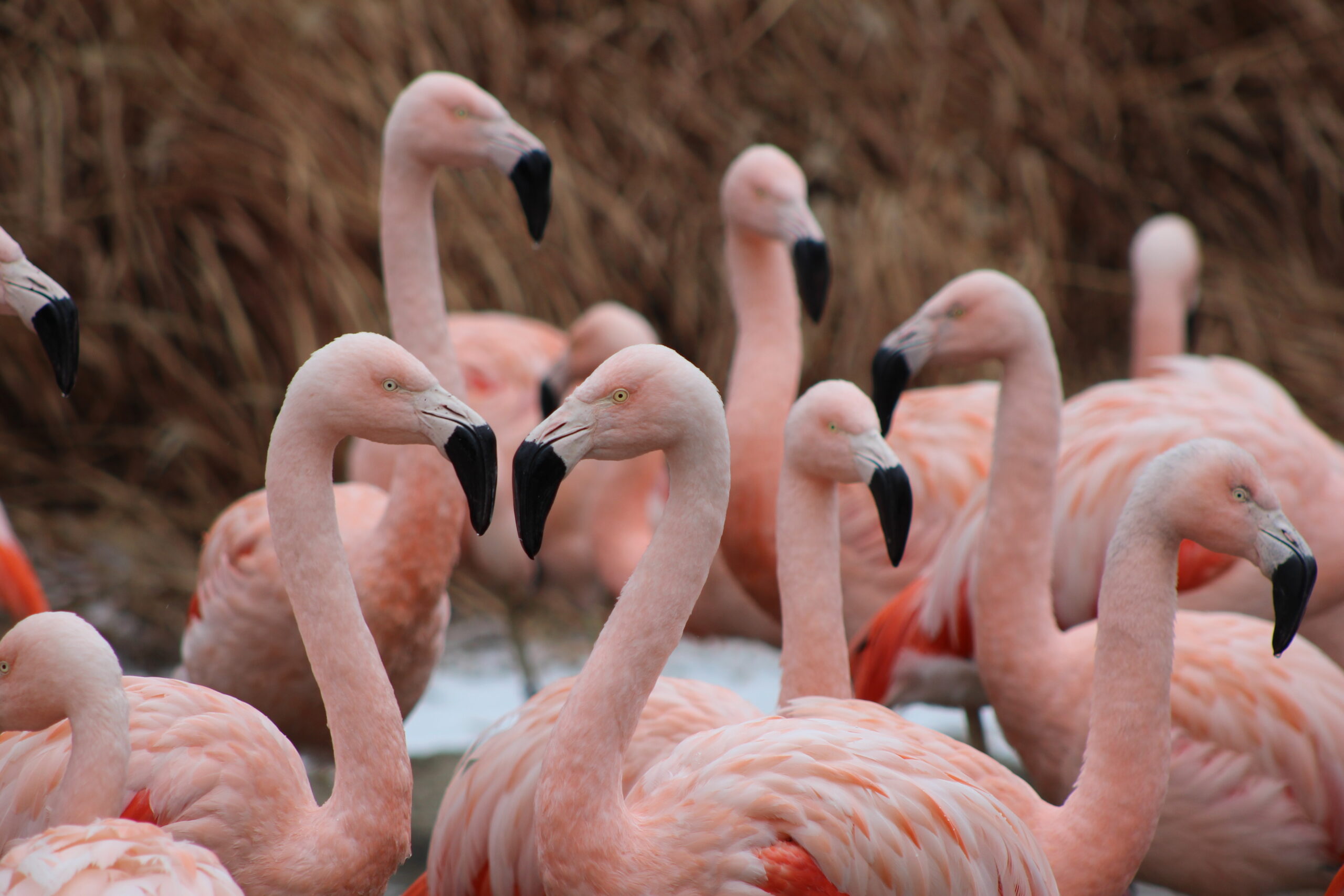
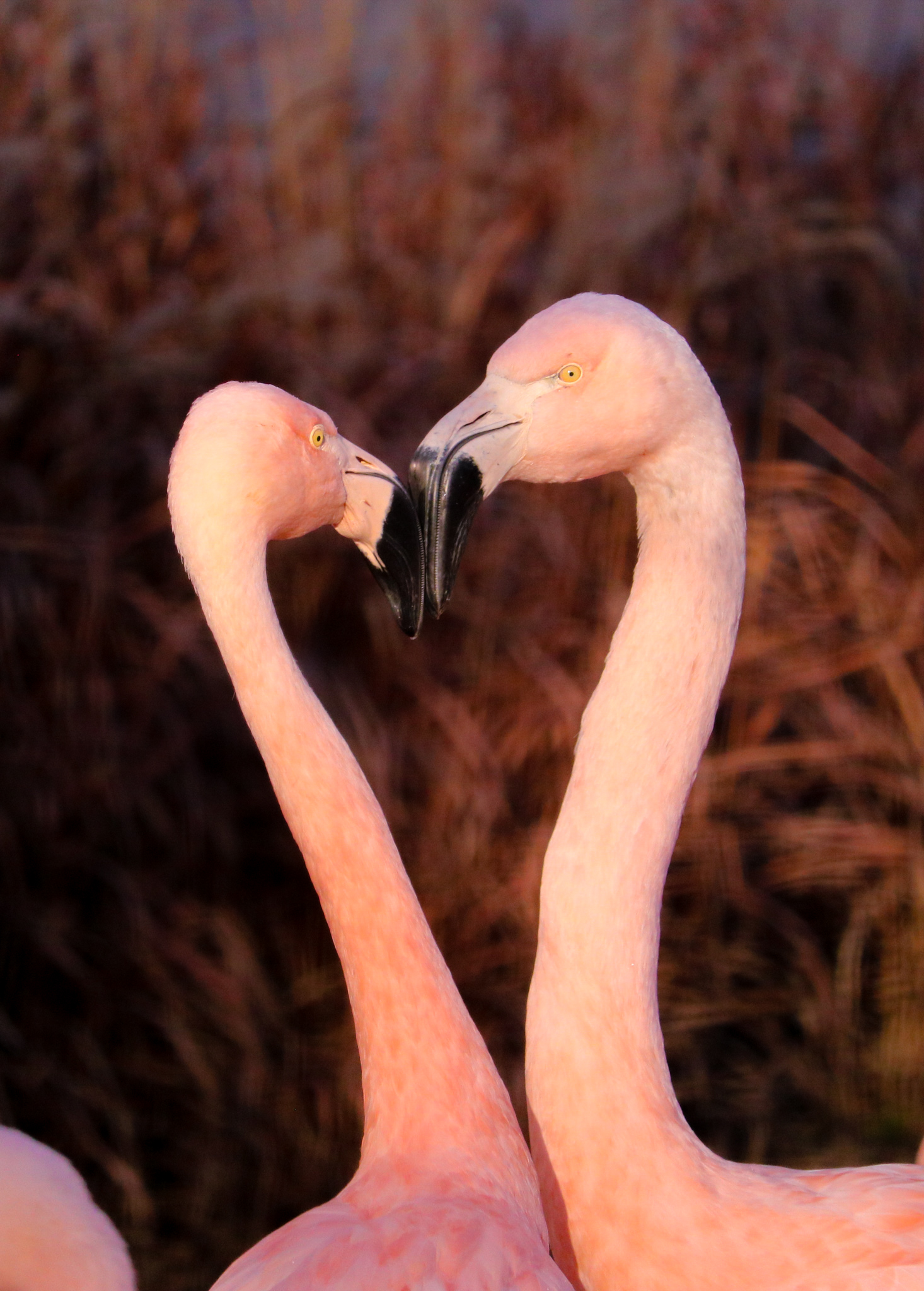
CHILEAN FLAMINGO
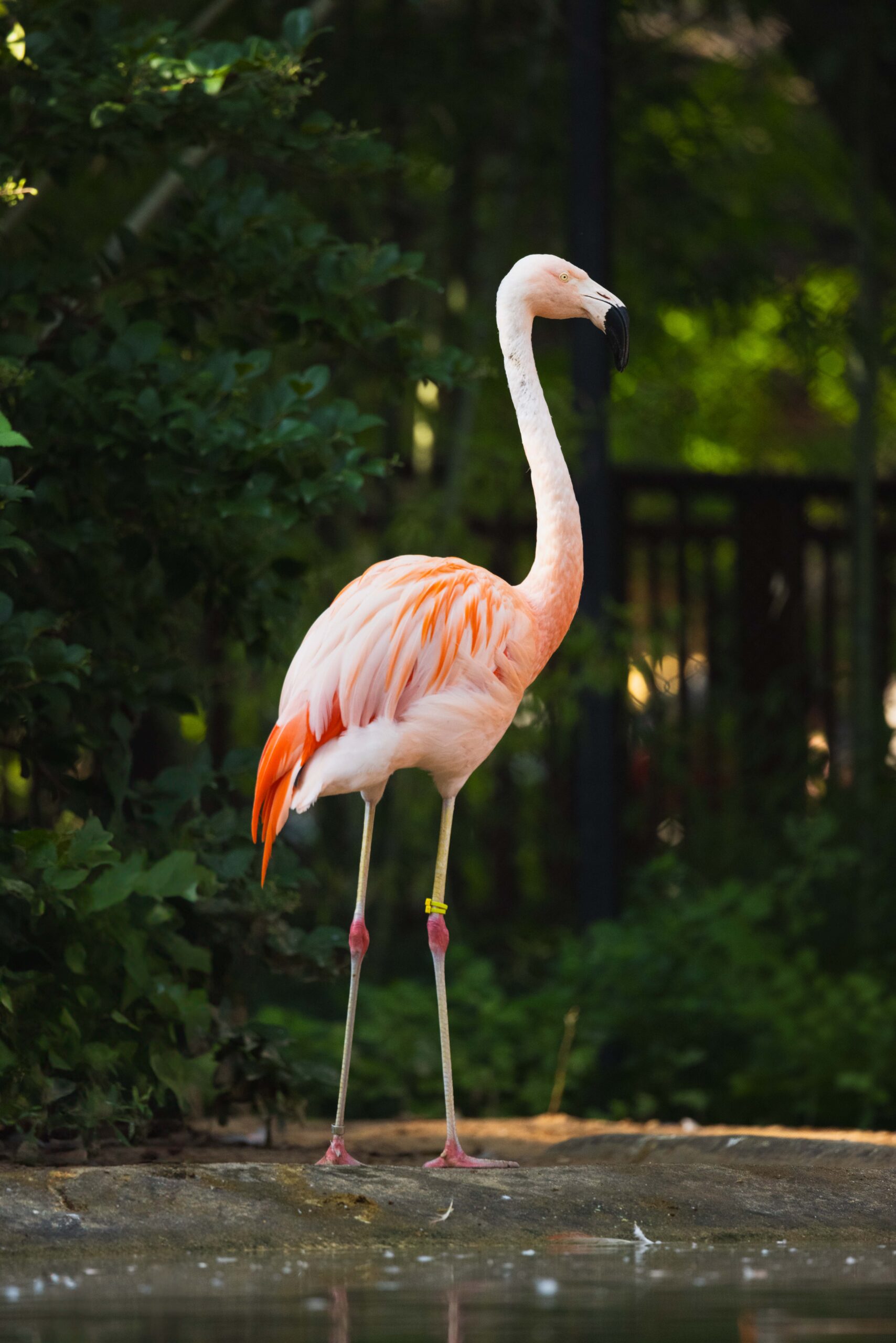
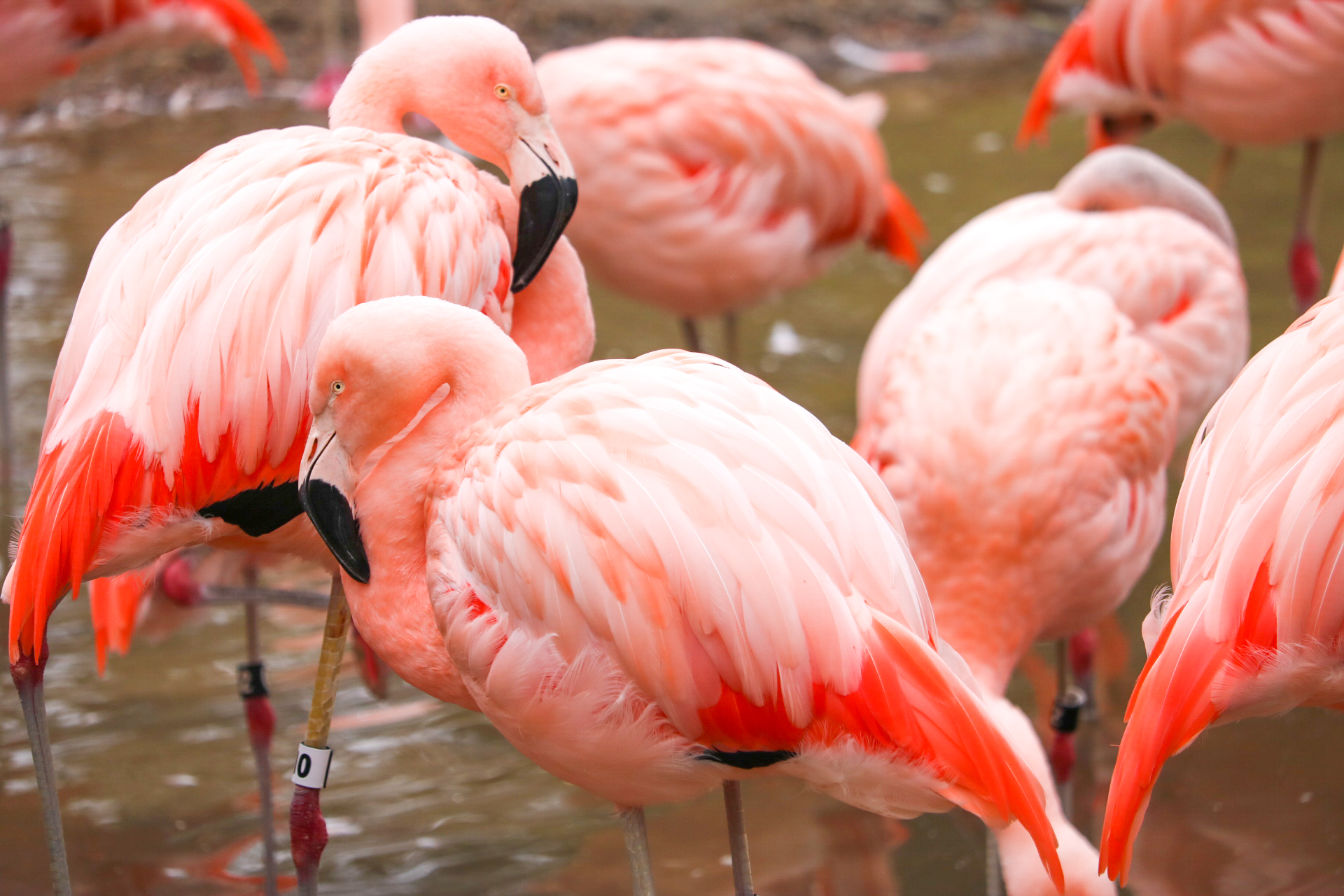
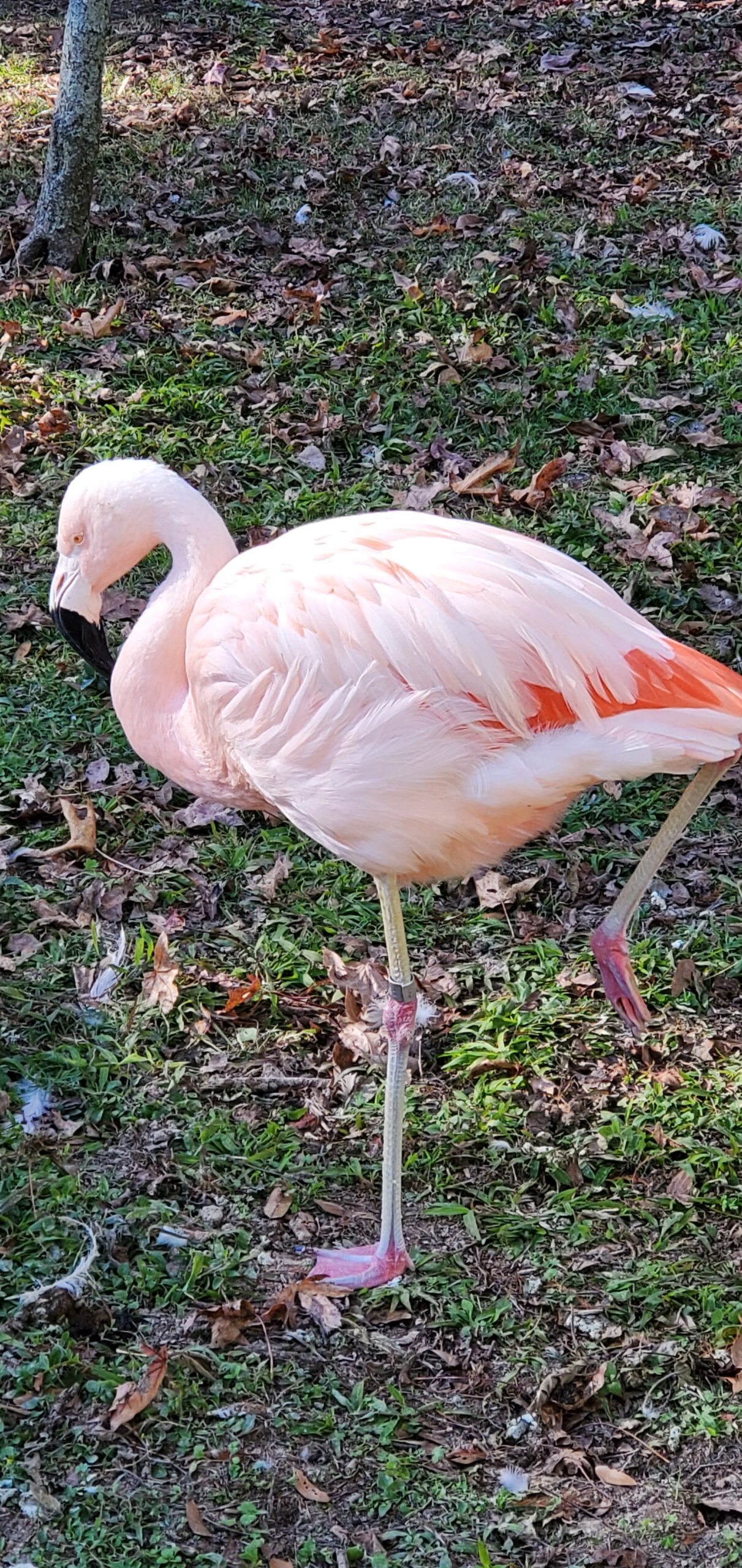
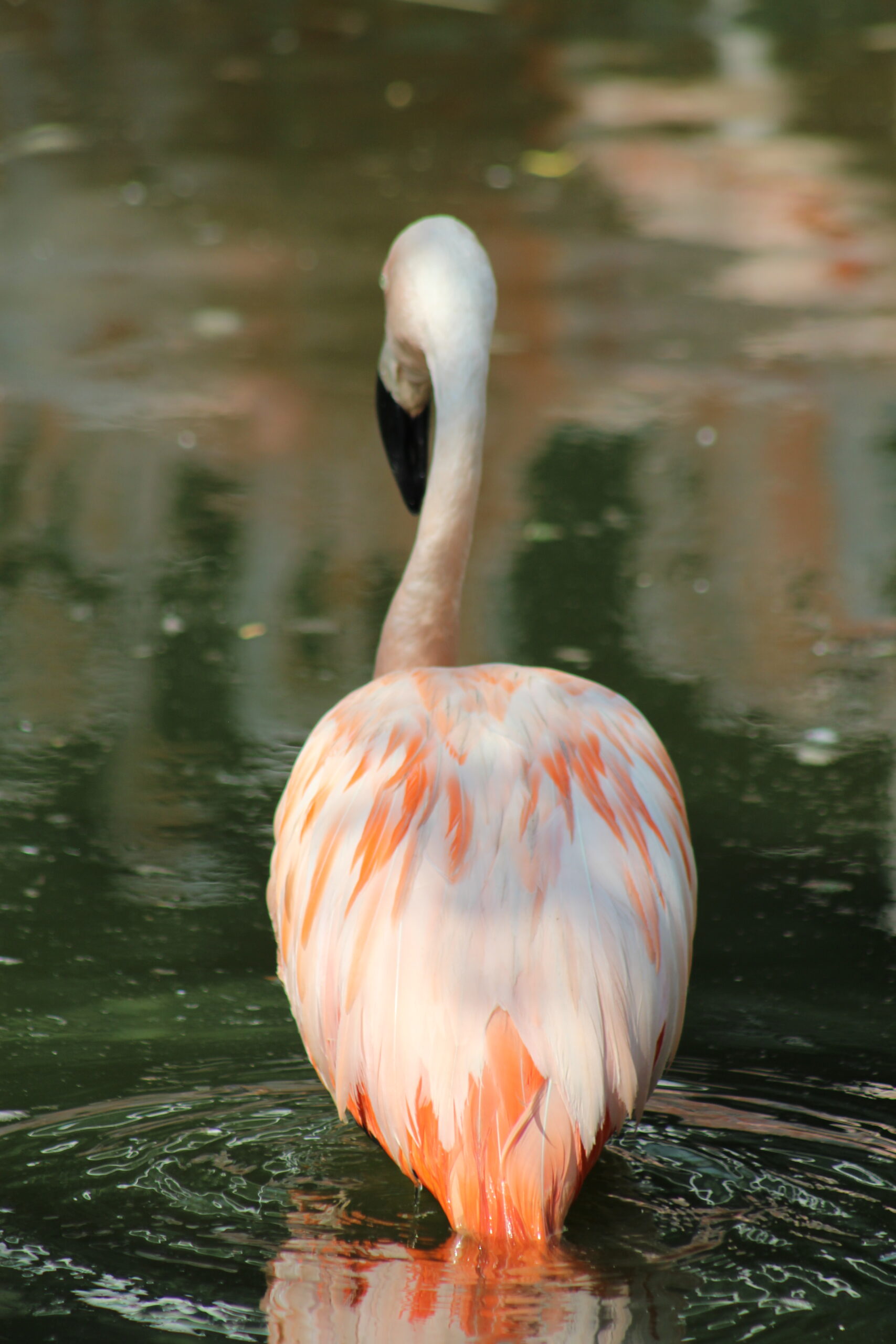
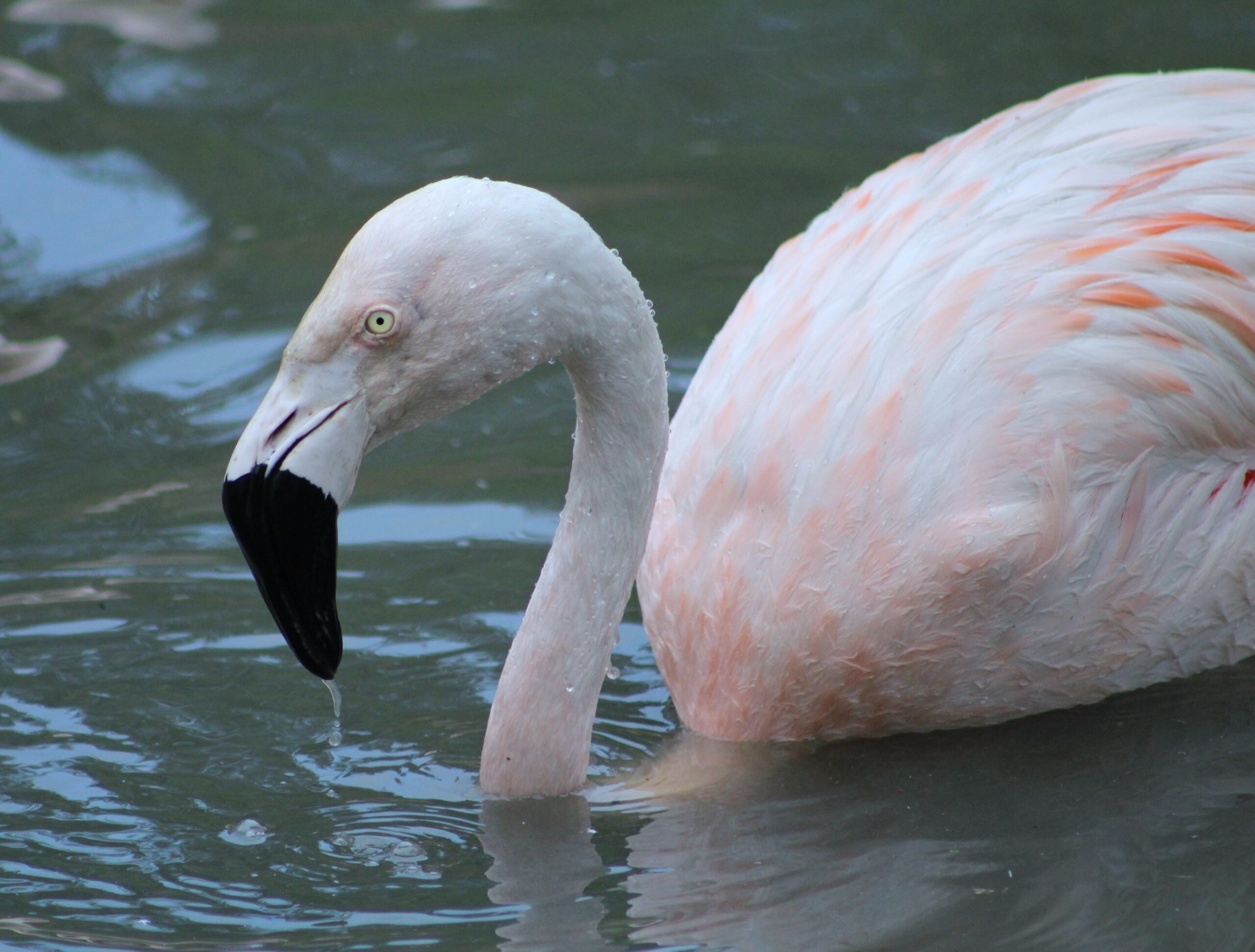
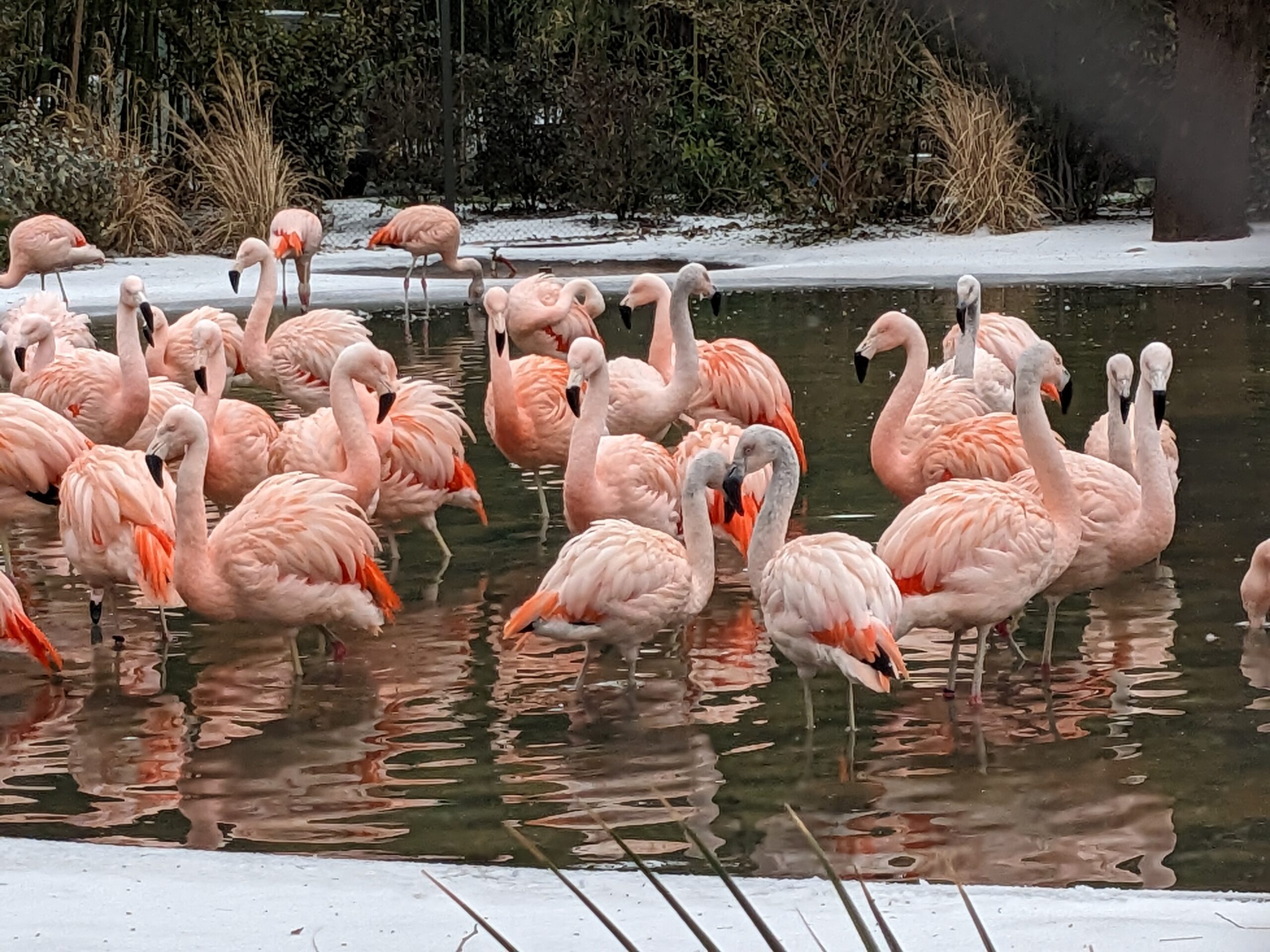
Breeding in saline lakes throughout the southern Andes and the lowlands of Argentina, the Chilean is the most common of the three strictly South American species of flamingo. Where all three co-occur in the altiplano of Peru, Bolivia and Chile, the Chilean Flamingo is best separated from other species by its blue grey legs with bright pink “knees,” and by the pink base to its bill. Another potentially useful clue is its faster foraging rate, typically walking while feeding almost twice as fast as the other two species. This more rapid pace stirs the water sufficiently so that small groups of Wilson’s Phalarope (Phalaropus tricolor) will cluster around their feet and feed on the prey that is churned up.
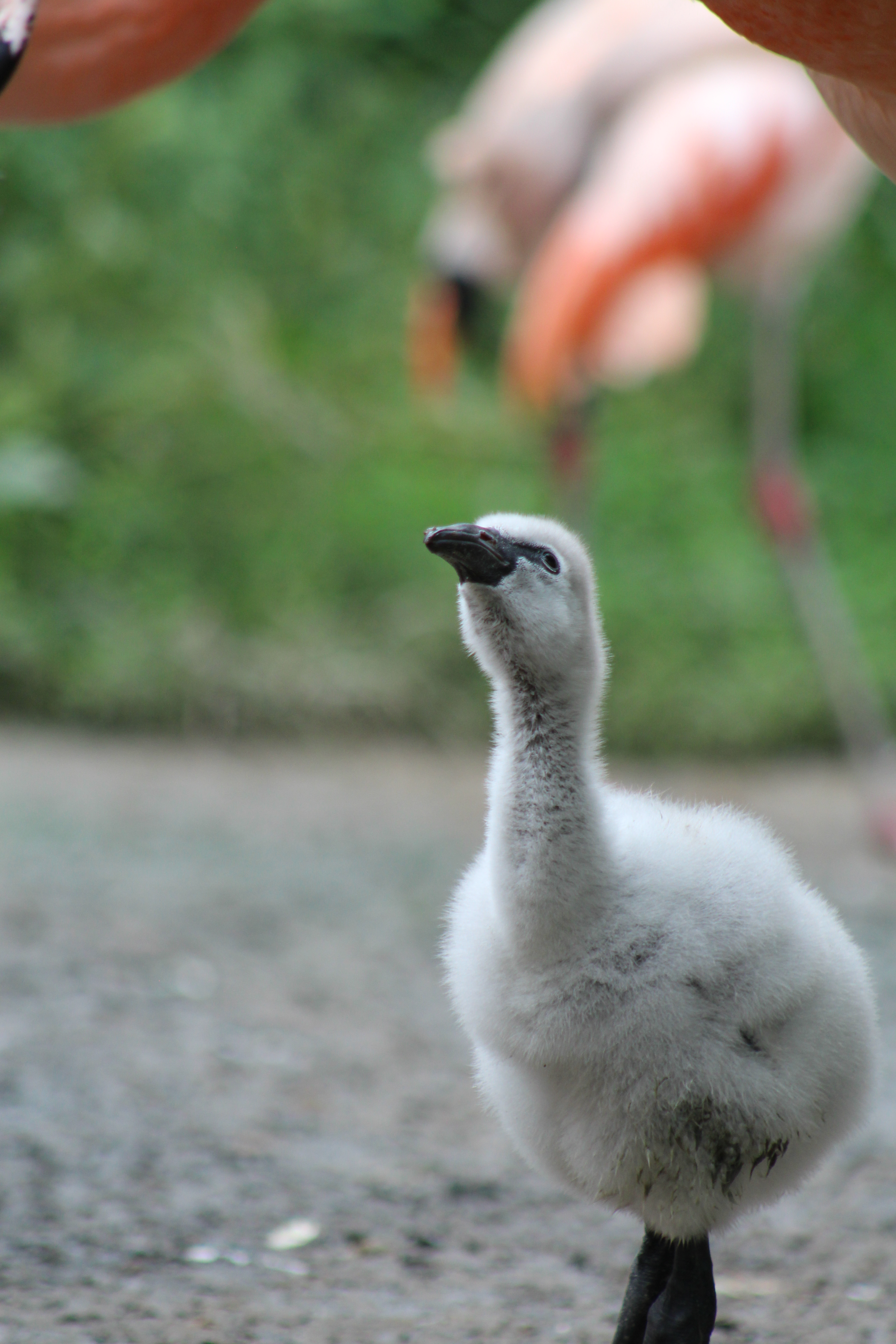
Field Identification: 105 cm; 1720–2500 g. Yellowish-grey legs with contrasting red knees and feet. Black of bill tip extends beyond bend; rest of bill very pale. Immature grey with brown and pink markings. Development of young divided into three age categories: chick (< 15 days old) has white down and salmon-pink bill and coral-red legs. Pre‐juvenile (1–3 months old) is covered in grey down (due to combination of double down coat) and when white down is shed, a brownish down coat is more evident; bill darker and legs are dark grey; and juvenile (4–5 months old) is characterized by vaned feathers, dorsal feathers are pale brown with dark rachis, underparts white and inner coverts are pale salmon, the bill is curved with a bluish base and charcoal-grey tip, and legs pale grey.
Systemactic and Hybridization History: Monotypic. Hybridizes with the Caribbean flamingo, Phoenicopterus ruber and Greater Flamgino, Phoenicopterus roseus.
Distribution: WC Ecuador S through Andes to Tierra del Fuego, extending E to S Brazil and Uruguay.
Movement: Birds breeding in high Andes winter along the Pacific coast or move to lower latitudes within Andes and to lower altitudes on C plains of Argentina and coastal wetlands in Central Chile. Birds abandon Junin (Peru) in Feb–May, when water level is high. In Sept, flocks fly N from Tierra del Fuego, where species is not uncommon in winter. Dispersive movements also occur between lakes outside breeding season. Wintering birds occur regularly in Uruguay and in S Brazil: in Rio Grande do Sulphoto , where large numbers may be present during Apr–Sept; a few reach SE Brazil occasionally, mainly in Sept–Dec. Wintering birds may be occurring increasingly frequently in Paraguay, where they have bred: 5200 were reported in Chaco in 2005. A nomadic visitor to Ecuador, occurring mainly on SW coasts N to Manabí province. Vagrants have reached Falkland Is.
Diet and Foraging: Generalist. Takes aquatic invertebrates, including: crustaceans, e.g. brine shrimps (Artemia), copepods (Boeckella), cladocerans, ostracods and amphipods; larvae and pupae of Diptera, including chironomids (Paratrichocladius) and brine flies (Ephydra); corixids; and snails. Almost always feeds at sediment/water interface, often with entire neck submerged, advancing steadily and almost in straight line. Also treading or stomping in same spot; apparently commoner in some lakes where aquatic plant Ruppia forms sparse carpet on bottom replete with invertebrates. Occasionally flocks swim to filter planktonic cladocerans right at water surface.
Sounds and Vocalizations: Commonest call is a rather subdued goose-like nasal tri-syllabic “ka-ha-hann” or “ro-ro-roh”. Also more drawn-out single grunts with a similar tonal quality “cuuuuh”. Large feeding flocks typically maintain a continuous “kucking”.
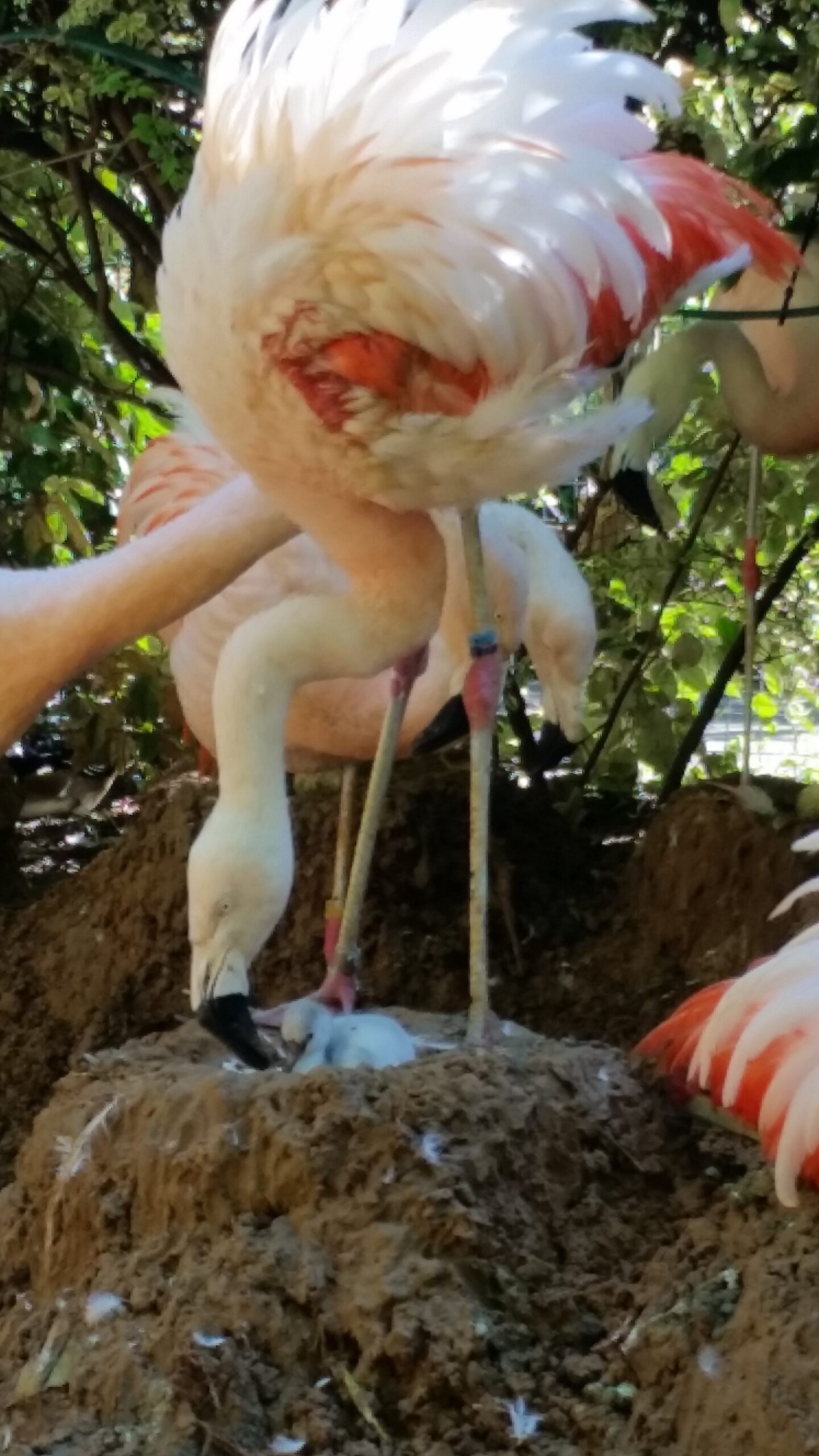
Breeding: Laying from Nov in S Argentina, Dec in Cordoba (C Argentina), Jan–Mar in altiplano, and Oct in extreme N of range at L Junín (Peru). Colonies are generally of up to 6000 pairs but up to 10,000 pairs have nested on islands in Mar Chiquita, Argentina. In the Andes it often nests alongside Andean Flamingo (Phoenicoparrus andinus) and/or James’s Flamingo (Phoenicoparrus jamesi). Nest is usually truncated cone of mud with shallow bowl on top; on rocky islands without mud, lays on bare ground. Nests on islets of floating vegetation (mainly Cynodon dactylon) have been found at the Ite coastland wetlands, southern Peru. Single egg; incubation 27–31 days; chicks have pale grey down; fledging 70–80 days.
Conservation Status: Not globally threatened. Currently considered Near Threatened. CITES II. The most numerous and widespread flamingo in South America, where a coordinated census in 2010 found 283,000 birds and estimated the global population at 300,000. Has probably declined but although its population was estimated at 500,000 birds in 1970s the apparent fall in numbers since then may be misleading and recent counts, using improved methodology, suggest that recent declines may not have been as serious as first thought. Nevertheless, it has probably been subject to intensive egg harvesting since arrival of man in South America; even in recent years, egg collectors have been responsible for partial or complete breeding failure of colonies in Bolivia. Post-1980 estimates suggested that there were c. 100,000 in Argentina; up to 30,000 in Chile; and tens of thousands in Peru and Bolivia, where greatest concentrations occur, e.g. 100,000 at Lake Poopo, Bolivia, in 1972. Breeding occurs on altiplano lakes in Peru. Breeding at coastal wetlands was unknown in Peru until recently, when birds have nested successfully at the Ite wetlands, Tacna: there were at least 60 nests there in 2012. A marked decline has been noted in C Chile and in moist pampas of Argentina, due to alteration of habitat. Concentrations of up to 100,000 birds have been reported at Mar Chiquita, in Cordoba (N Argentina), where the species breeds in some years: 29,277 chicks fledged in 1977 and 45,000 in 1997; this locality is threatened by water abstraction and changes in salinity. Species breeds fairly well in captivity and small feral populations have been reported in Europe and N America . In northern Patagonia, where the species spends the non-breeding season, a population abandoned one site (Carelmapu) when the human disturbance increased, with people extracting algae (Gracillaria sp.). Human disturbance also seems to be the reason behind the absence of the species in other sites (e.g., Coihuin, Aucar).
del Hoyo, J., P. F. D. Boesman, and E. F. J. Garcia (2024). Chilean Flamingo (Phoenicopterus chilensis), version 1.1. In Birds of the World (J. del Hoyo, A. Elliott, J. Sargatal, D. A. Christie, and E. de Juana, Editors). Cornell Lab of Ornithology, Ithaca, NY, USA. https://doi.org/10.2173/bow.chifla1.01.1
JAMES’ (PUNA) FLAMINGO
The James’s Flamingo, or Puna Flamingo, is the smallest flamingo in South America. It has a restricted and local distribution, and as such, it can be comparatively difficult to observe. This species and the Andean Flamingo (Phoenicoparrus andinus) are the sole members of the genus Phoenicoparrus; a genus that differs from other flamingo genera by its deep lower jaw, long filtering filaments in the maxilla, and the lack of a hind toe. The typical pink coloration and appearance of James’s Flamingo, coupled with its foraging specializations, amazing courtship behaviors, and adaptations to an extreme environment, make it one of the most emblematic and distinctive birds in South America.
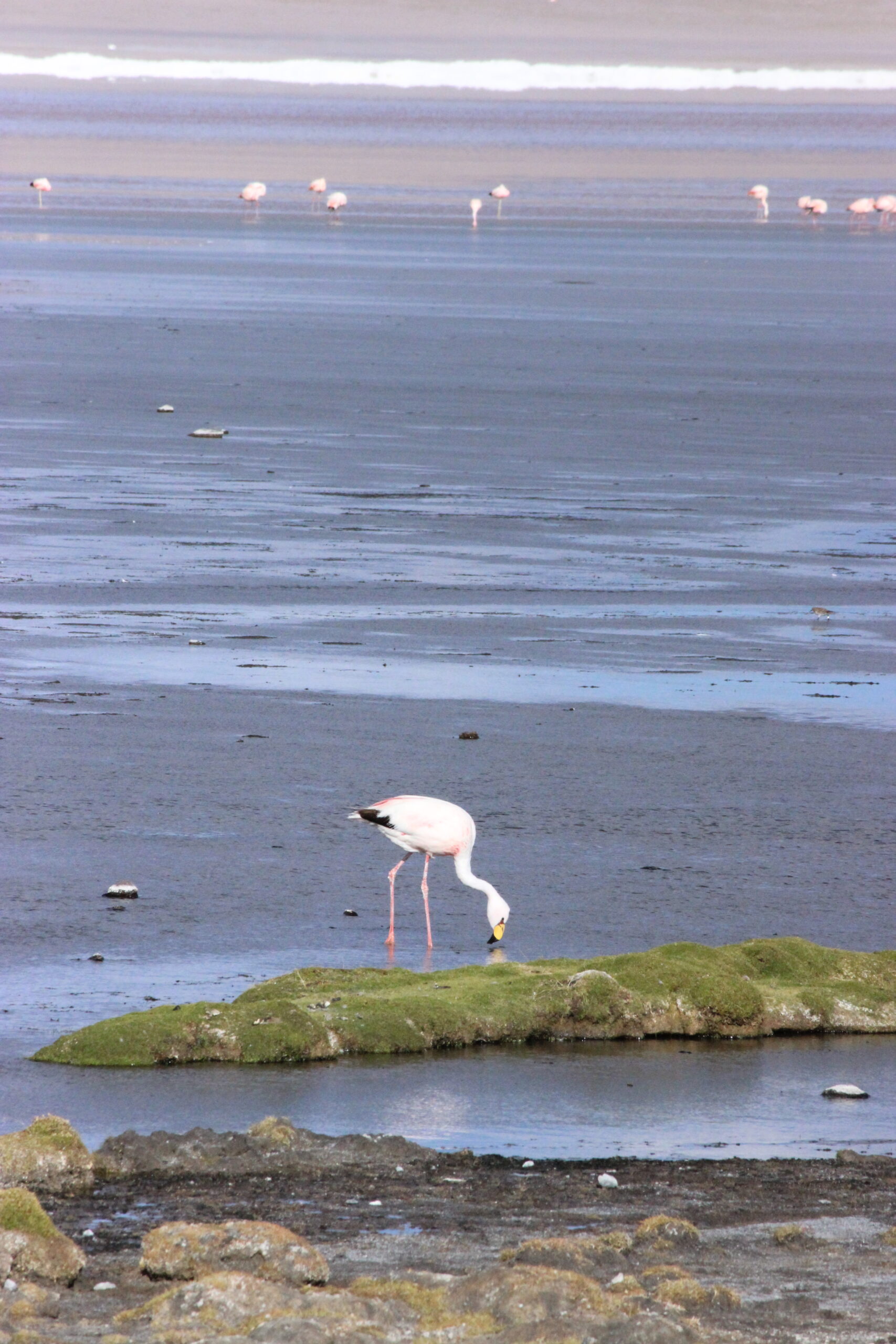
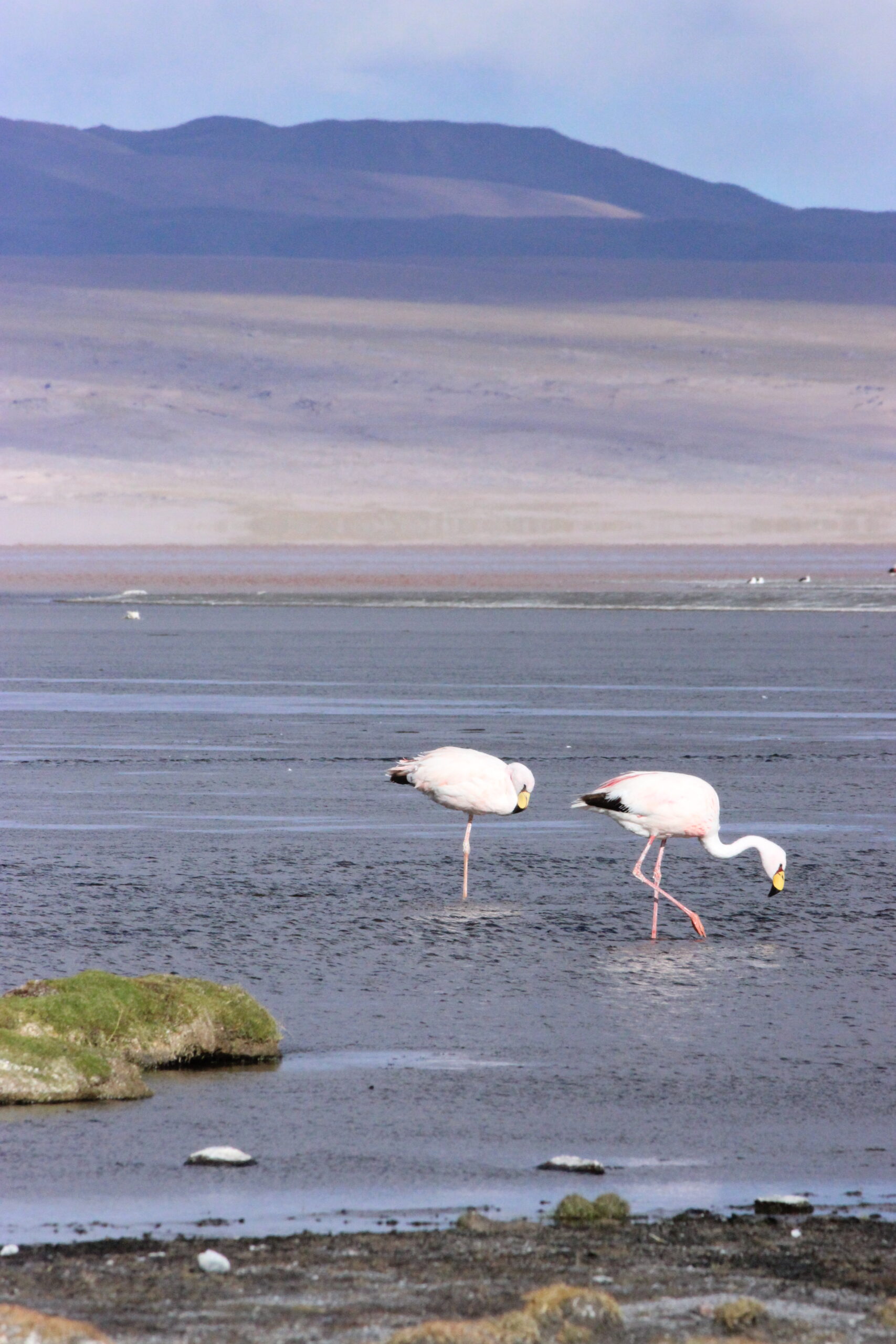
This species inhabits the Puna ecoregion of Argentina, Bolivia, Chile, and Peru, where it prefers shallower water and higher elevations than other flamingos (mostly at 2,300‒4,900 m). There are some exceptions to this, though, as some individuals remain year-round at Laguna Mar Chiquita in the lowlands of the province of Córdoba (Argentina) and small numbers occasionally turn up on the coasts of Chile and Peru. James’s Flamingo nests at only a few locations in Bolivia, Argentina, and Chile, but it forms colonies numbering up to tens of thousands of individuals during the breeding season. The largest colony, at Laguna Colorada, Bolivia, contains more than 40,000 birds.
The first known individual of this species was captured in early 1886 near Volcán Isluga (Chile) and was described to science twice (under the same name) in the same year by different authors in Chile and England. According to the most recent surveys, its global population was estimated to be 154,000 birds in 2021. It is currently categorized as Near Threatened by the IUCN due to suspicions that it will suffer a moderately rapid population decline in the next three generations, owing mainly to habitat loss and degradation.
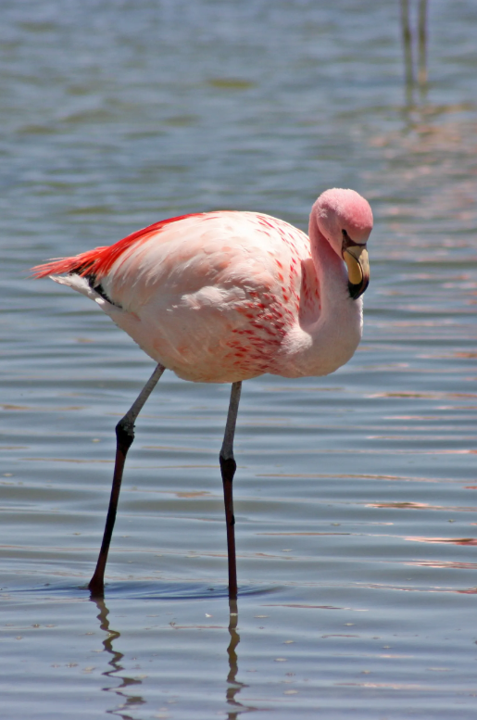
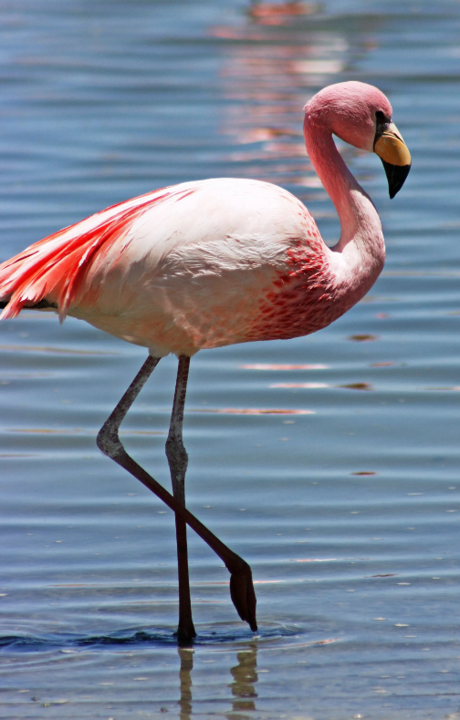
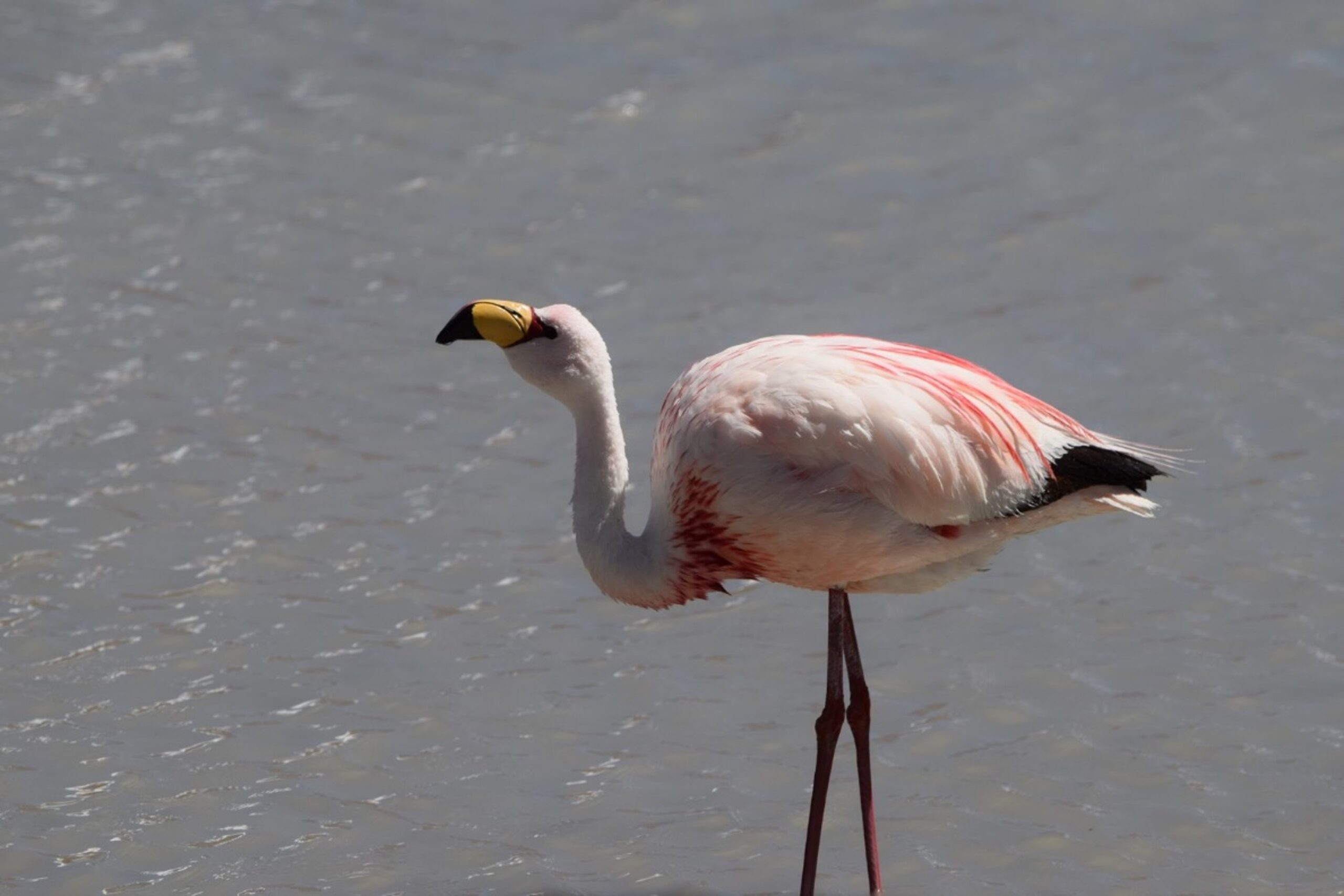
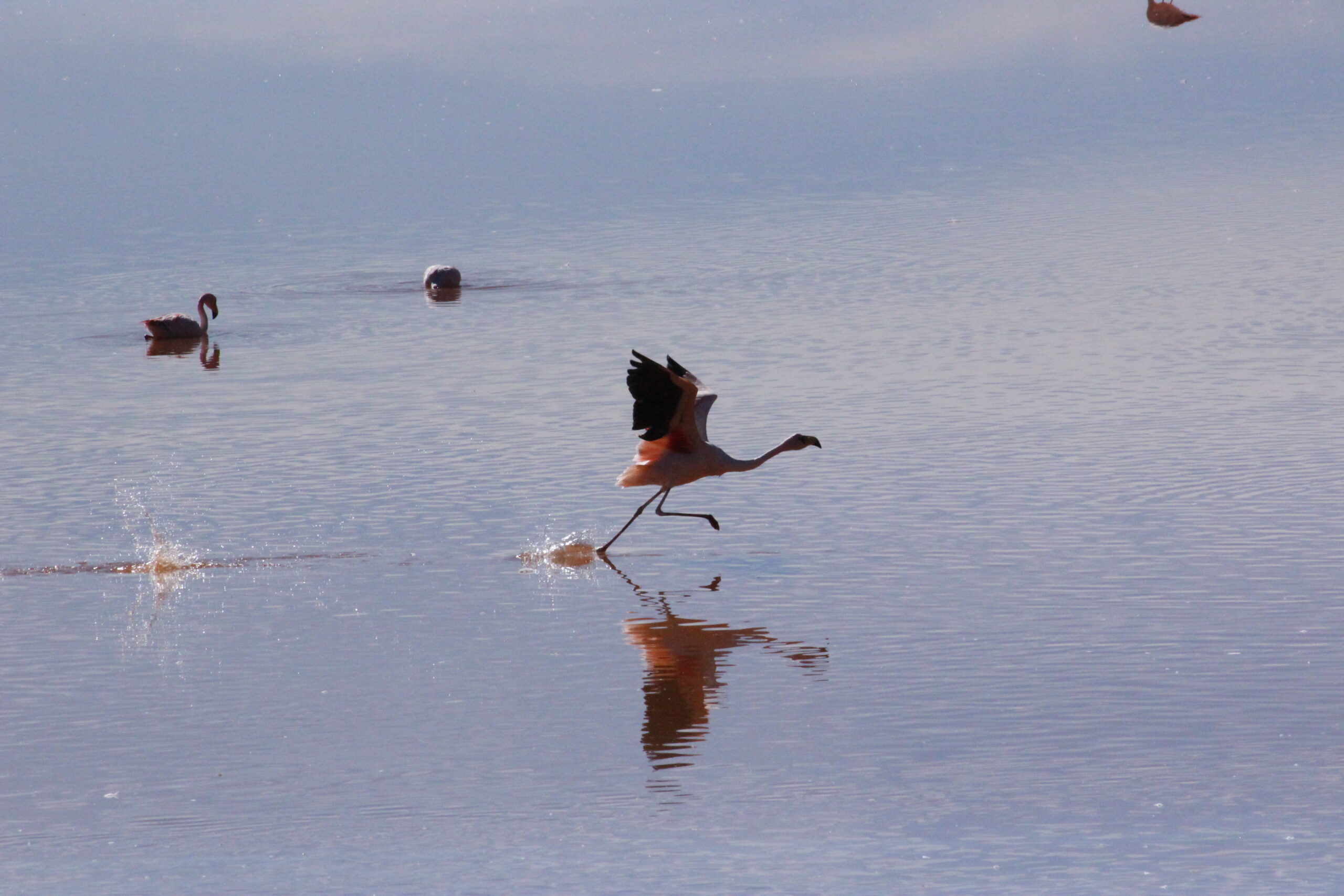
Identification Summary: The James’s Flamingo is the smallest flamingo. Its small size, black-tipped bill, and brick-red legs without a hind toe make it relatively easy to distinguish. Its plumage is generally pale pink, with more intensely pink areas during breeding. With the wings closed, the black flight feathers form a small wedge-shaped black spot; a red axillary spot is visible in flight or with the wings unfolded. The crimson red on the lores and periocular form a mask.
Field Identification: James’s Flamingo is the smallest flamingo on the continent, totaling 90-110 cm. It is mostly found in brackish and shallow water in the Puna, although it can also be found at lower altitudes. The sexes are similar. Adults are generally pale pink with brick-red legs without a hind toe. The bill is thick, rounded, and flattened at the sides, and a light golden or intense yellow-orange color, with some black on the tip. The lores and periocular region are crimson red, featherless, and connected to the base of the bill where it becomes wider. The flight feathers are black with a conspicuous red axillary patch and pink tertials. With wings closed, the remiges form a small, wedge-shaped black patch, sometimes covered by the elongated scapulars. When breeding, individuals are more intensely pink on the head and breast, with scarlet-red scapulars. Immature birds are like adults but more whitish, with a relatively larger black spot on the wing.
Similar Species Summary: Two other species of flamingos, the Andean Flamingo (Phoenicoparrus andinus) and the Chilean Flamingo (Phoenicopterus chilensis), overlap in distribution with the James’s Flamingo. All three species be found together in groups of tens, hundreds, or even thousands. In these large groups, pink tones flood the landscape, so identification can be difficult, given the species’ morphological similarities.
Similar Species: James’s Flamingo is similar to the Andean Flamingo (Phoenicoparrus andinus); however, the Andean Flamingo is larger (total length: 100-140 cm), with diagnostic yellow legs. In the Andean Flamingo, the neck and chest are deep pink, the burgundy-colored bare skin is restricted to the base of the bill and periocular, and the tertials are black. On the ground, it shows a larger triangular black patch than the James’s Flamingo.
James’s Flamingo is also similar to the Chilean Flamingo (Phoenicopterus chilensis), although the latter is larger (total length: 106-125 cm) and longer-legged, with a white iris, gray legs with red knees and membranes, and a hind toe. When standing, it has a bright red wing panel formed by the wing coverts.
In both the Andean Flamingo and Chilean Flamingo, the black extends on the bill from the tip to beyond the bend. In the Andean Flamingo, the rest of the bill is yellow, while it is pale pink in the Chilean Flamingo. In the James’s Flamingo, the naked space at the lores is wider and forms a red mask, and the upper mandible is much narrower.
In juveniles, species can be differentiated by the bill shape, being smaller than in other Andean Flamingos. In addition, the head and neck appear cleaner and more uniform than in congeners, and streaks are restricted to the lower back. The absence of the hind toe rules out the Chilean Flamingo.
Rivas, C. E., V. Pantoja, E. Mardones Muñoz, R. Tapia, J. Cabezas, N. Olmos-Moya, and M. Cortés-Norambuena (2024). James’s Flamingo (Phoenicoparrus jamesi), version 2.0. In Birds of the World (F. Medrano and G. M. Kirwan, Editors). Cornell Lab of Ornithology, Ithaca, NY, USA. https://doi.org/10.2173/bow.jamfla1.02
GREATER FLAMINGO
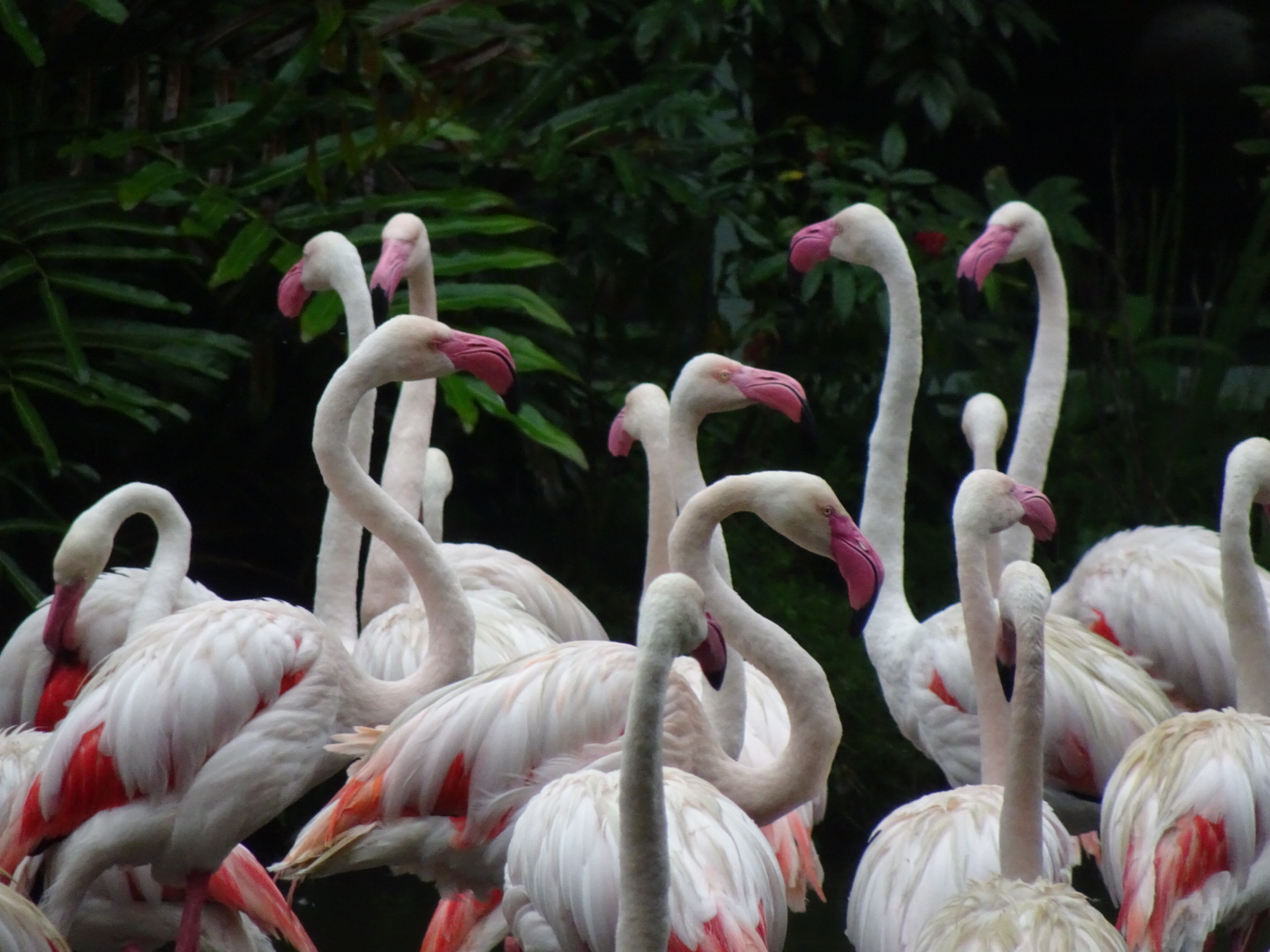
The Greater Flamingo’s range spans Africa, western Asia, and southern Europe, where it is usually found in shallow, saline, alkaline wetlands, such as salt lakes, coastal lagoons, intertidal mudflats, and saltworks during the breeding season. This species has a great dispersal capacity outside of the breeding season, but it is highly philopatric. There is also variation in the migratory status of different populations.
Greater Flamingo generally feeds in shallow water. It is a specialized filterer that uses a variety of different feeding methods. The diet is varied and consists of small invertebrates, microalgae, and plant seeds. The species is also considered an ecosystem engineer, which through its foraging activity can modify aquatic habitats, at least over short-term periods.
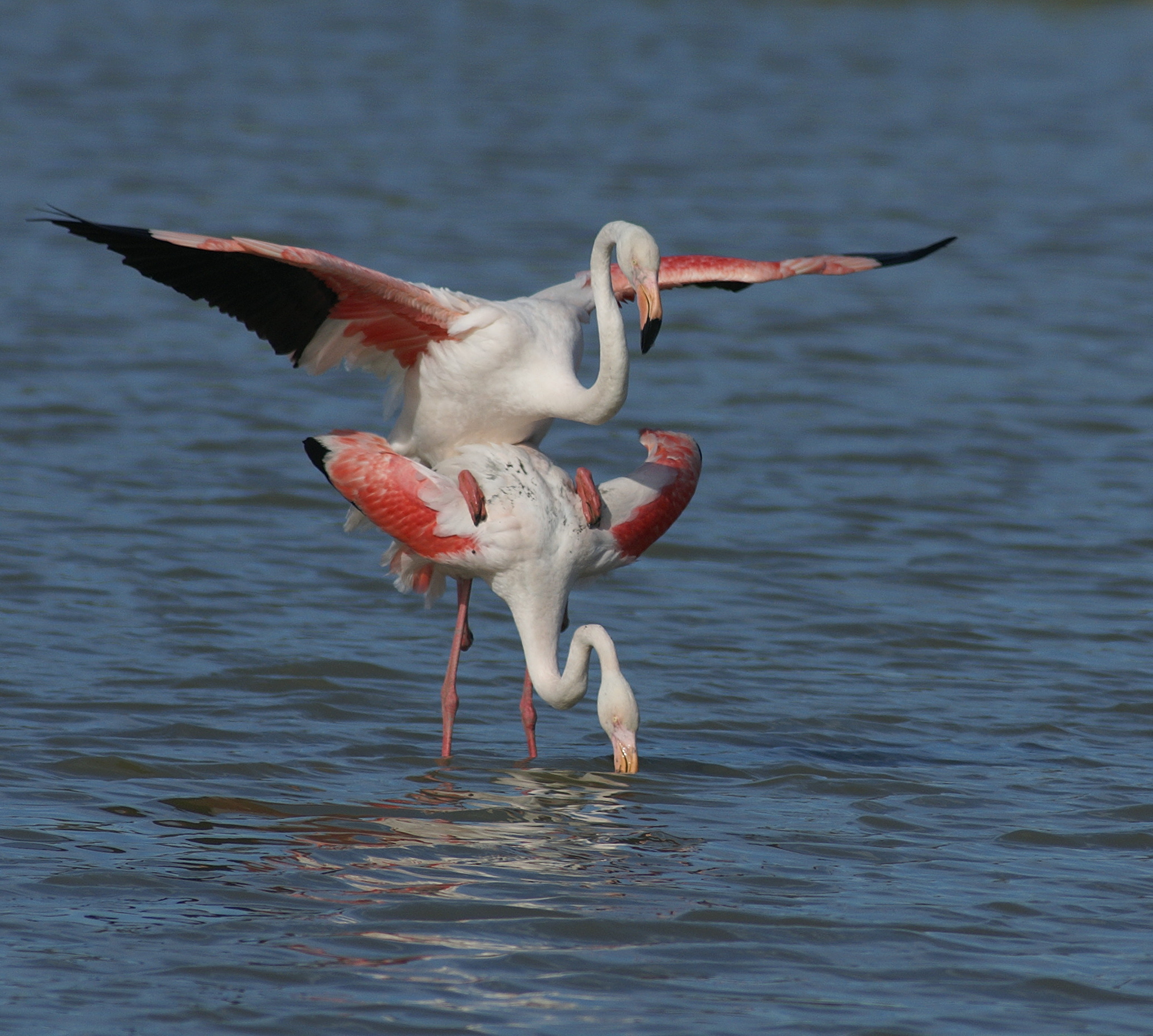
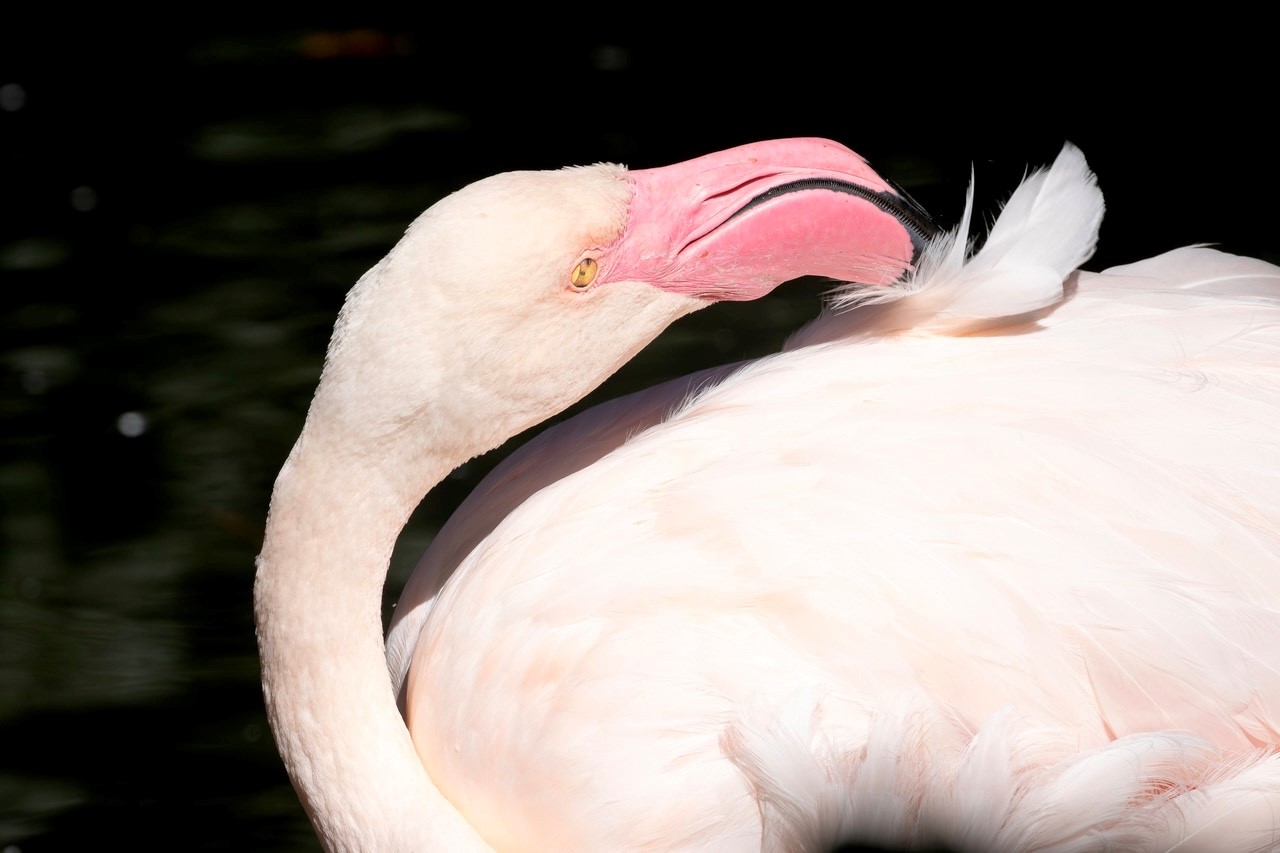
Courtship activities begin several months before breeding. Flamingos gather in groups of 10–12 to several hundred birds, usually in equal proportions of males and females. The display repertoire consists of a series of postures and movements. During group displays, males and females perform displays such that individual differences in plumage coloration are more easily assessed, which may facilitate mate choice. The complexity of sexual displays increases the likelihood of successfully attracting a mate. The plumage is also more colorful during the courtship season, but fades in other times of the year. During the displaying period, flamingos were observed more often than in other seasons rubbing their cheeks on their uropygial glands and transferring carotenoid pigments, mainly canthaxanthin, from these glands to the feathers on the neck, breast, and anterior back feathers. The feathers became more colorful when the quantity of pigments applied over them was greater, providing evidence of cosmetic coloration. The use of these pigmented secretions may function as a signal amplifier by increasing the perceptibility of plumage color, and hence of individual quality.
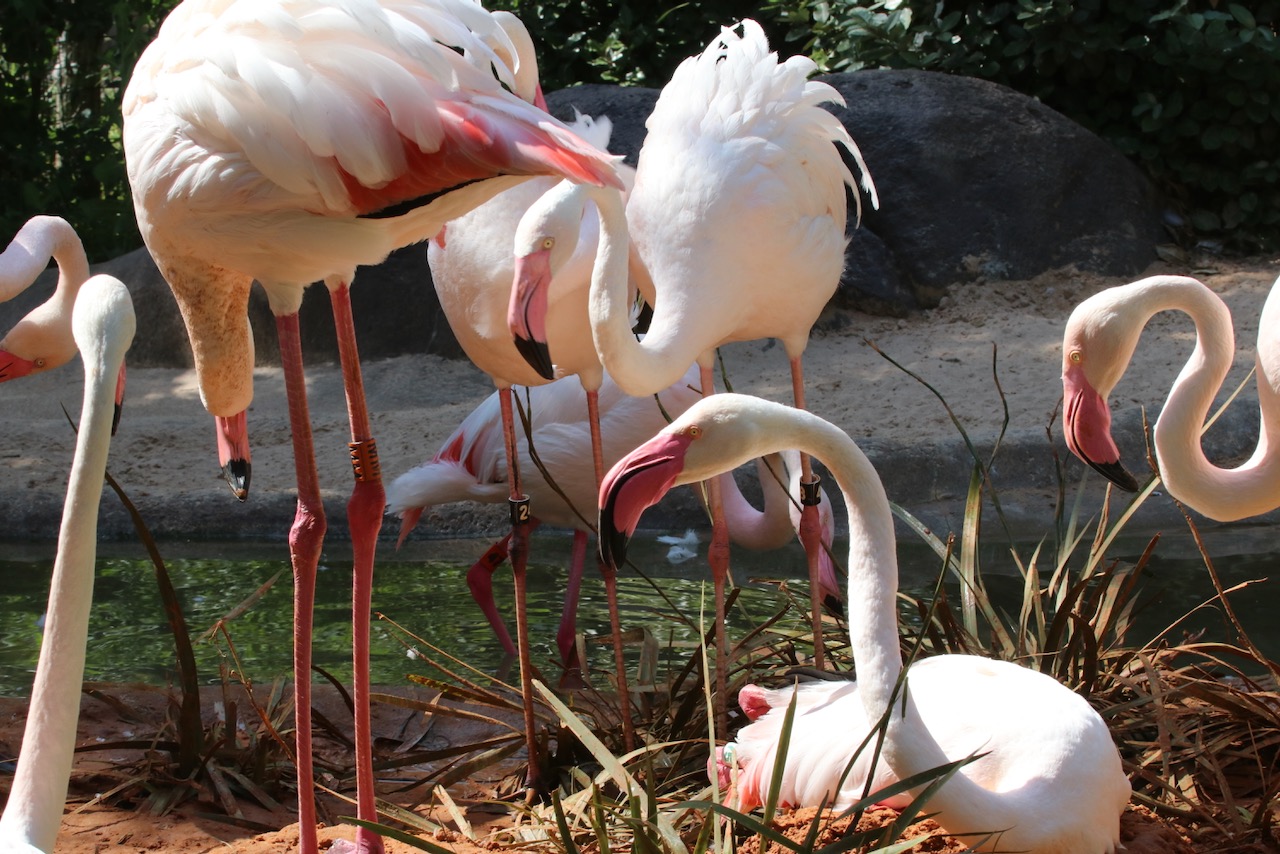
Greater Flamingo is seasonally monogamous. Mate-switching between consecutive breeding seasons is very high and has also been observed within breeding seasons after nest failure during incubation. For successful breeding to occur, there must be adequate water levels in the breeding wetlands, which does not occur every year in seasonal wetlands; too much rainfall can cause nest flooding, and too little can dry out the wetland, causing mass death of the chicks. It nests on islets within wetlands to avoid access by terrestrial predators. There is only one brood, but if it fails during incubation, there may be multiple nesting attempts. It usually breeds on muddy substrates, where mud is scraped to construct a mound nest elevated above ground level to prevent flooding. However, the species has also been recorded breeding on sandy or rocky substrates. Females lay a single egg, and incubation is carried out by both sexes and lasts 27–36 days. The chicks are precocial and semi-nidifugous, and are fed by parents on regurgitated liquid secretions from the upper digestive tract glands. Chicks leave the nest at 7–10 days, and at 10–12 days they aggregate in crèches. Fledging occurs at an age of 71–98 days, and juveniles leave the breeding area when they are 80–139 days old. There is great variation between years in breeding success. It is a very long-lived species that reaches at least 40 years of age, and adult survival is high.
Greater Flamingo is very sensitive to disturbance by predators, including man, and may abandon their breeding colonies, which causes reproductive failure. Like other wetland-dwelling species, it also suffers from habitat degradation or loss, hunting, trapping, collisions with structures, and lead poisoning. The overall population has been estimated at 690,000–910,000 individuals. However, more accurate censuses are needed.
Field Identification: Body length is 120–125 cm; wingspan 140–187 cm. Greater Flamingo has a very long neck and legs and a bent bill with a black tip. Adults in Definitive Basic Plumage are pale pinkish. The wings are long and narrow, with mottled salmon to crimson upperwing and underwing coverts (partially dependent on carotenoid ingestion) and black primaries and secondaries . The bill is pinkish with a distinct black tip, the legs are reddish, and the iris is yellow. Juvenile Plumage is mostly white and grayish; juveniles have a dull yellowish, pale grayish, or bluish tinged bill with a reduced and less distinct dark tip, grayish legs, and a brown iris. First-year birds (in Formative Plumage) are like juveniles but with scattered pale pink feathers. Second-year birds (in Second Basic Plumage) and some third-year birds (in Third Basic Plumage) can be aged by intermediate plumage characteristics, retained juvenile underwing coverts, and/or duller bills and irises Sexes are alike in all plumages but, on average, males are larger than females.
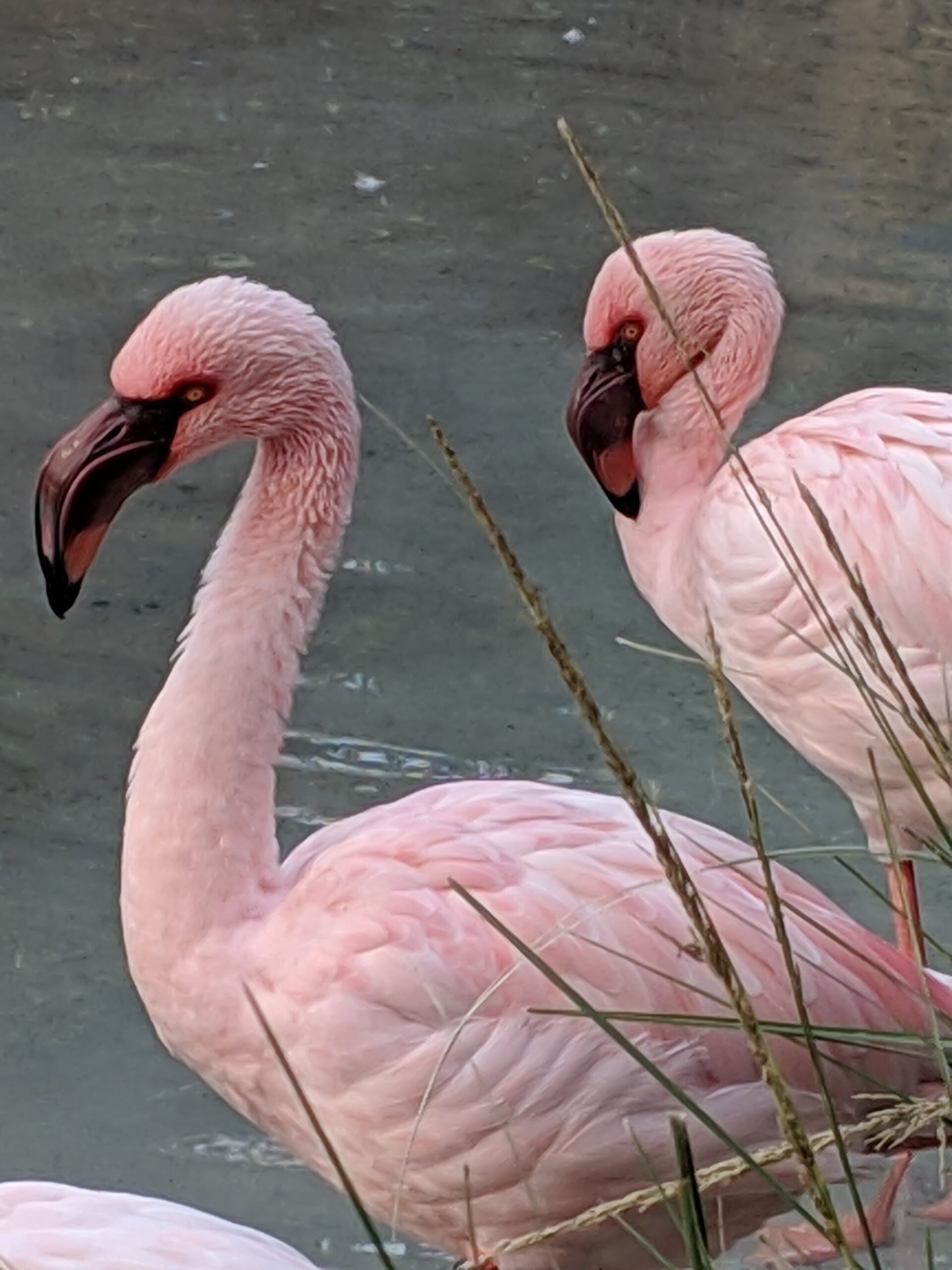
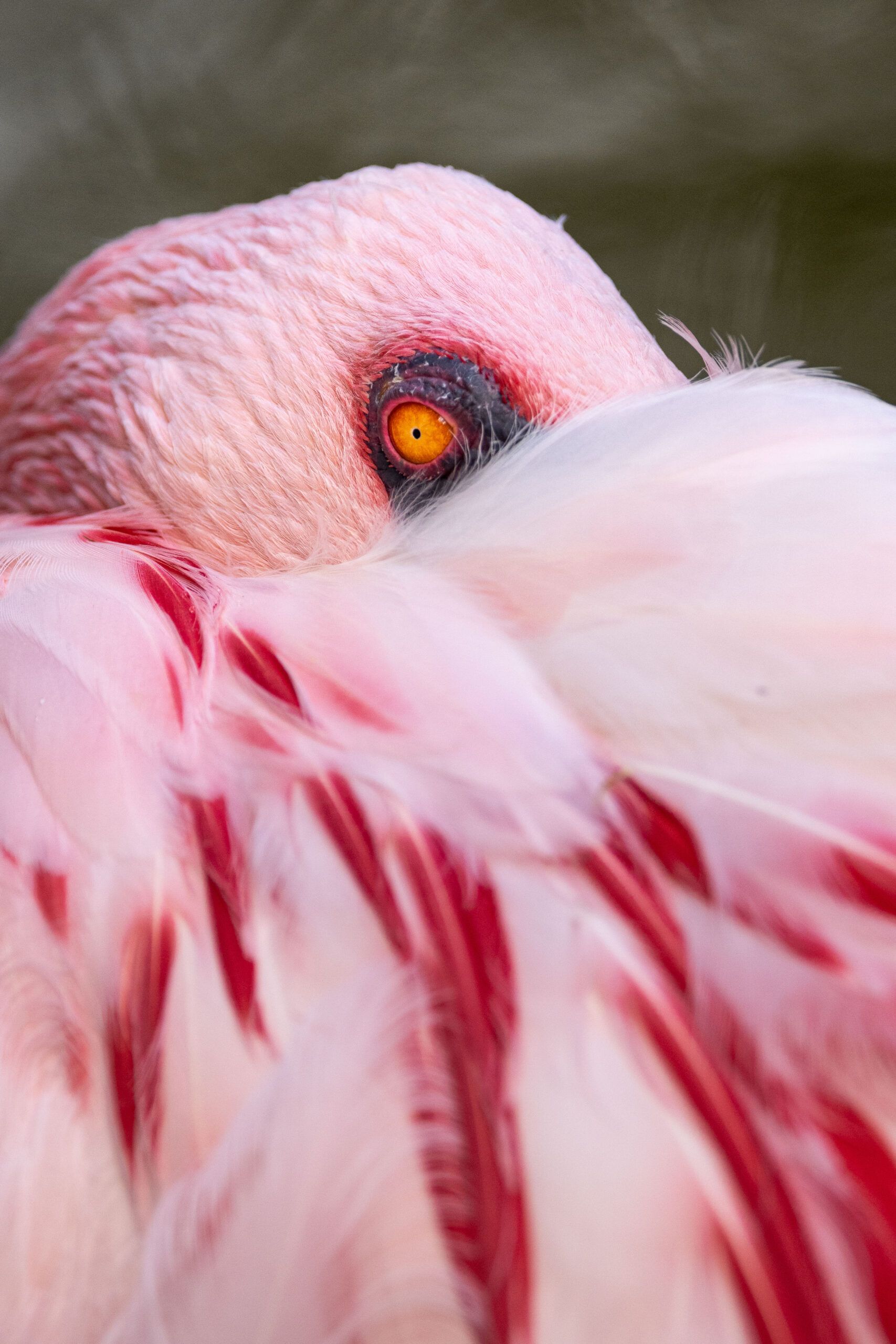
Similar Species: Through parts of its range, Greater Flamingo can be confused with Lesser Flamingo (Phoeniconaias minor) and Chilean Flamingo (Phoenicopterus chilensis). Greater Flamingo is larger than Lesser Flamingo; the bill of Greater Flamingo has two colors: pink with a black tip, whereas in Lesser Flamingo there are three colors: dark gray, red, and a black tip. The eyes of Lesser Flamingo are surrounded by a reddish-brown ring and dark bare skin, whereas in Greater Flamingo, there is neither a dark ring nor dark bare skin. Juvenile plumage of Lesser Flamingo is grayish brown and darker than that of Greater Flamingo, whereas adult Lesser Flamingo average brighter pink than Greater Flamingo. The Chilean Flamingo, which has been introduced into parts of the range of Greater Flamingo in Europe, but which is otherwise completely allopatric, is also smaller, the bill is whitish with extensive black tip (including the bill angle on both upper and lower mandibles), adults average paler pink plumage, and the legs and feet are grayish to grayish yellow with pink joints and webs.
Related Species: Morphological and genetic studies have revealed the existence of two clades within extant flamingos. One group includes American Flamingo (Phoenicopterus ruber), Greater Flamingo (Phoenicopterus roseus), and Chilean Flamingo (Phoenicopterus chilensis), which have a compact bill adapted to filter larger food items than the other species. The other group, characterized by having a bulbous bill to filter smaller food items, is formed by Lesser Flamingo (Phoeniconaias minor), Andean Flamingo (Phoenicoparrus andinus), and James’s Flamingo (Phoenicoparrus jamesi). Within the first group, Greater Flamingo appears to be sister to American Flamingo, with these two species in turn sister to Chilean Flamingo.
Salvador, A., M. Á. Rendón, J. A. Amat, and M. Rendón-Martos (2024). Greater Flamingo (Phoenicopterus roseus), version 3.0. In Birds of the World (S. M. Billerman and B. K. Keeney, Editors). Cornell Lab of Ornithology, Ithaca, NY, USA. https://doi.org/10.2173/bow.grefla3.03

LESSER FLAMINGO
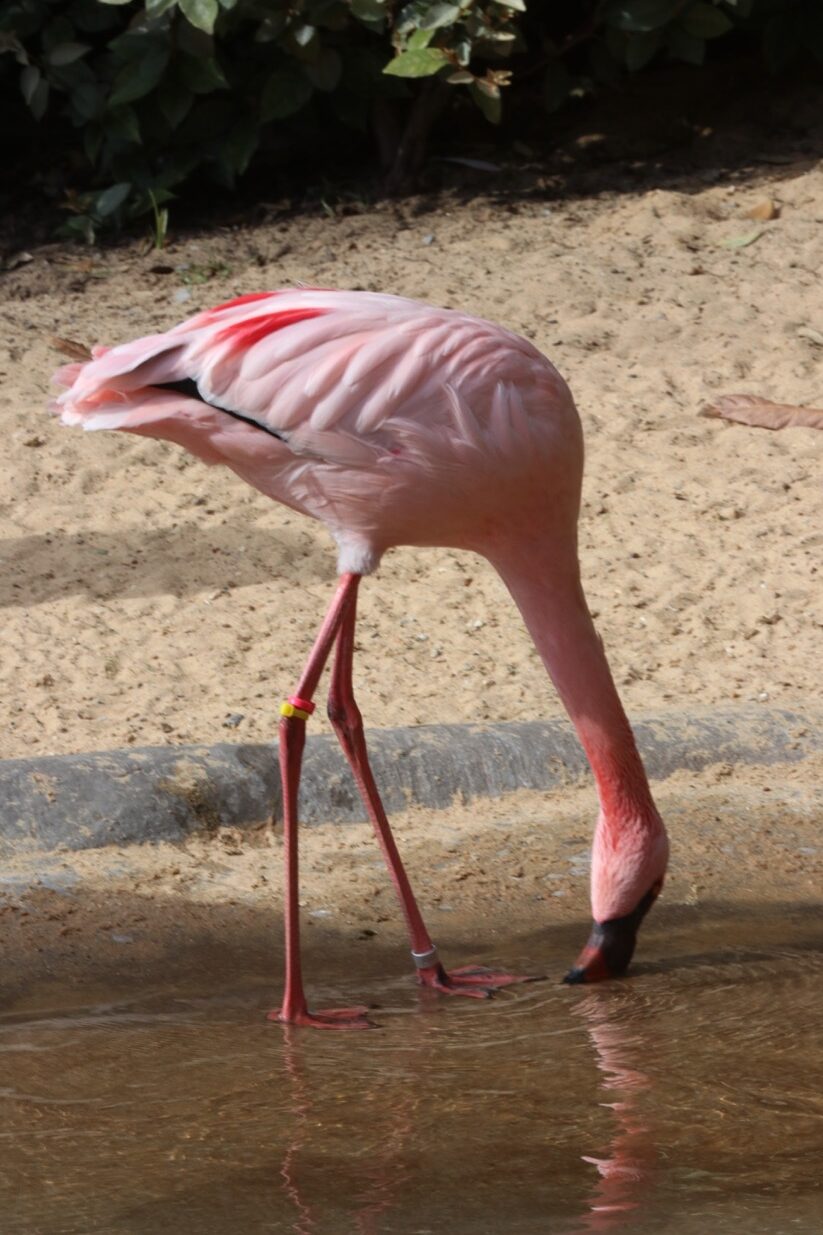
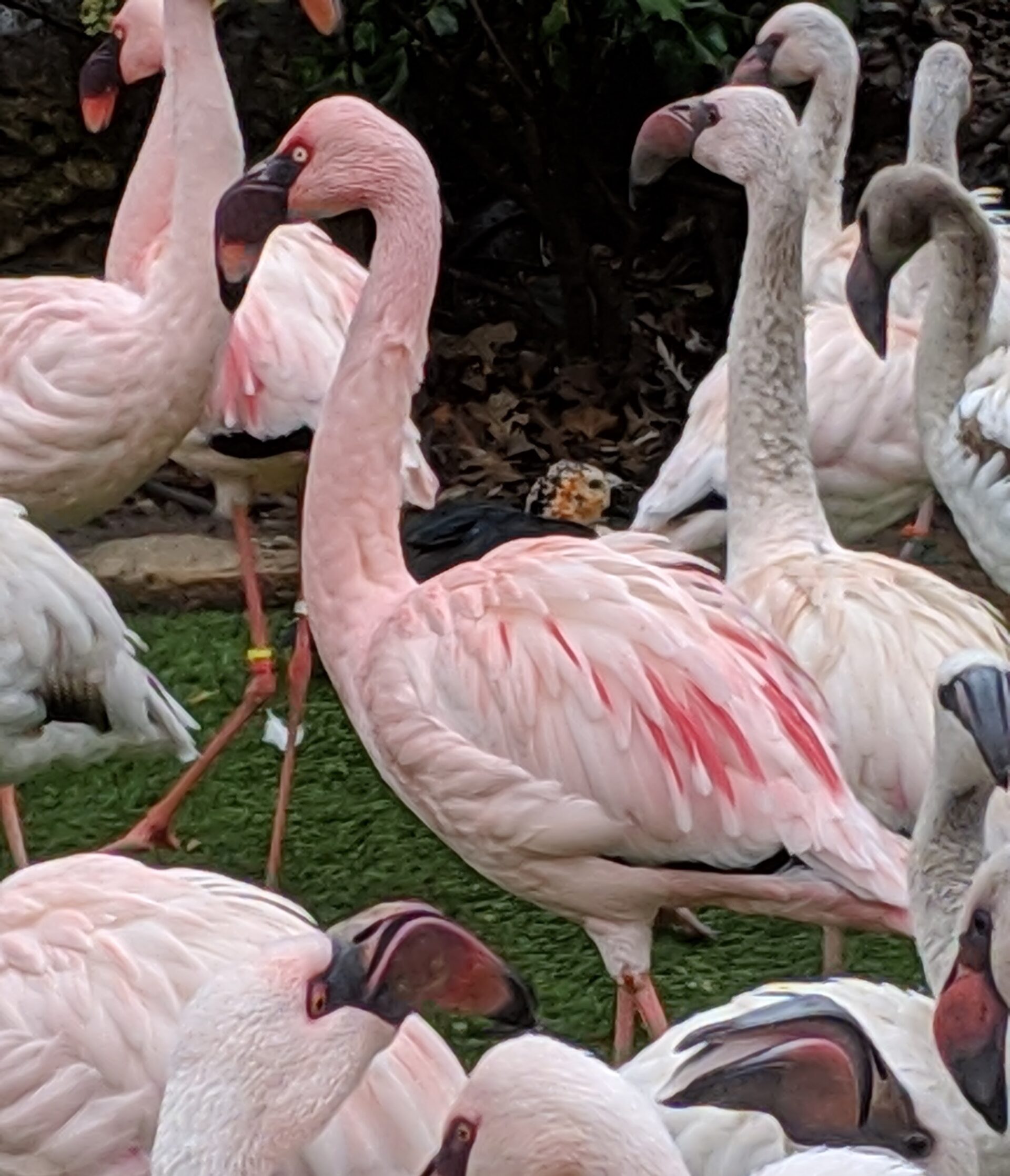
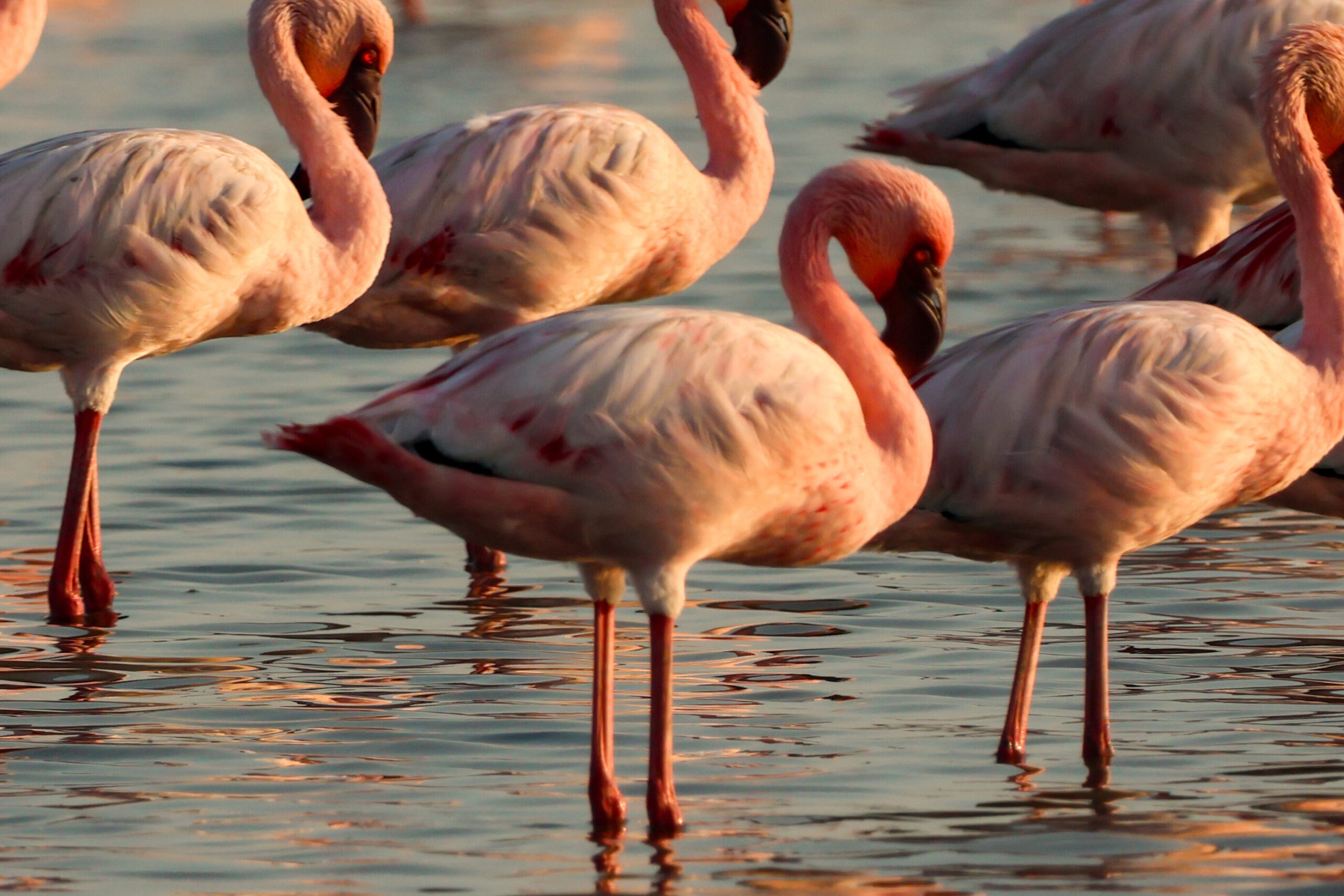
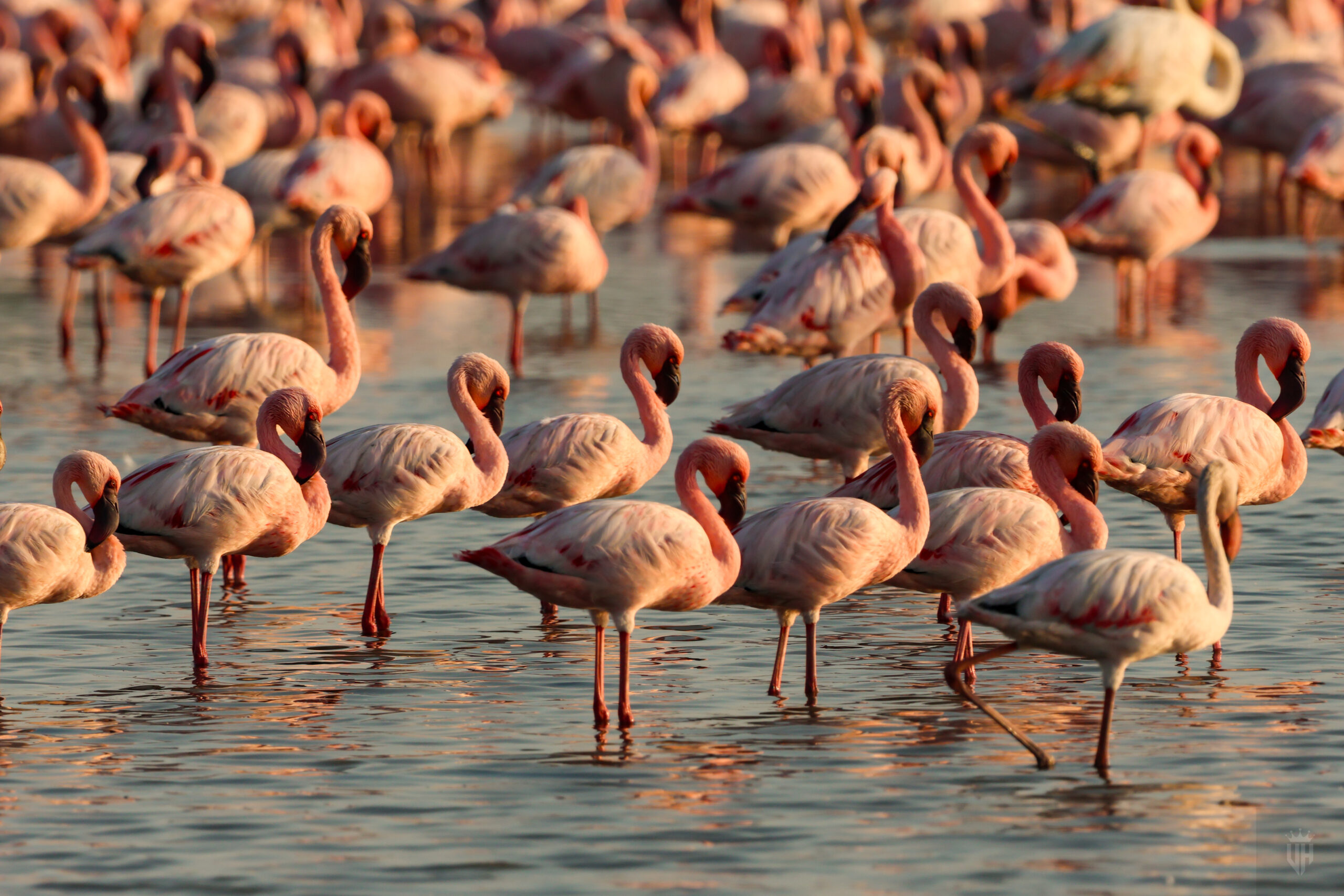
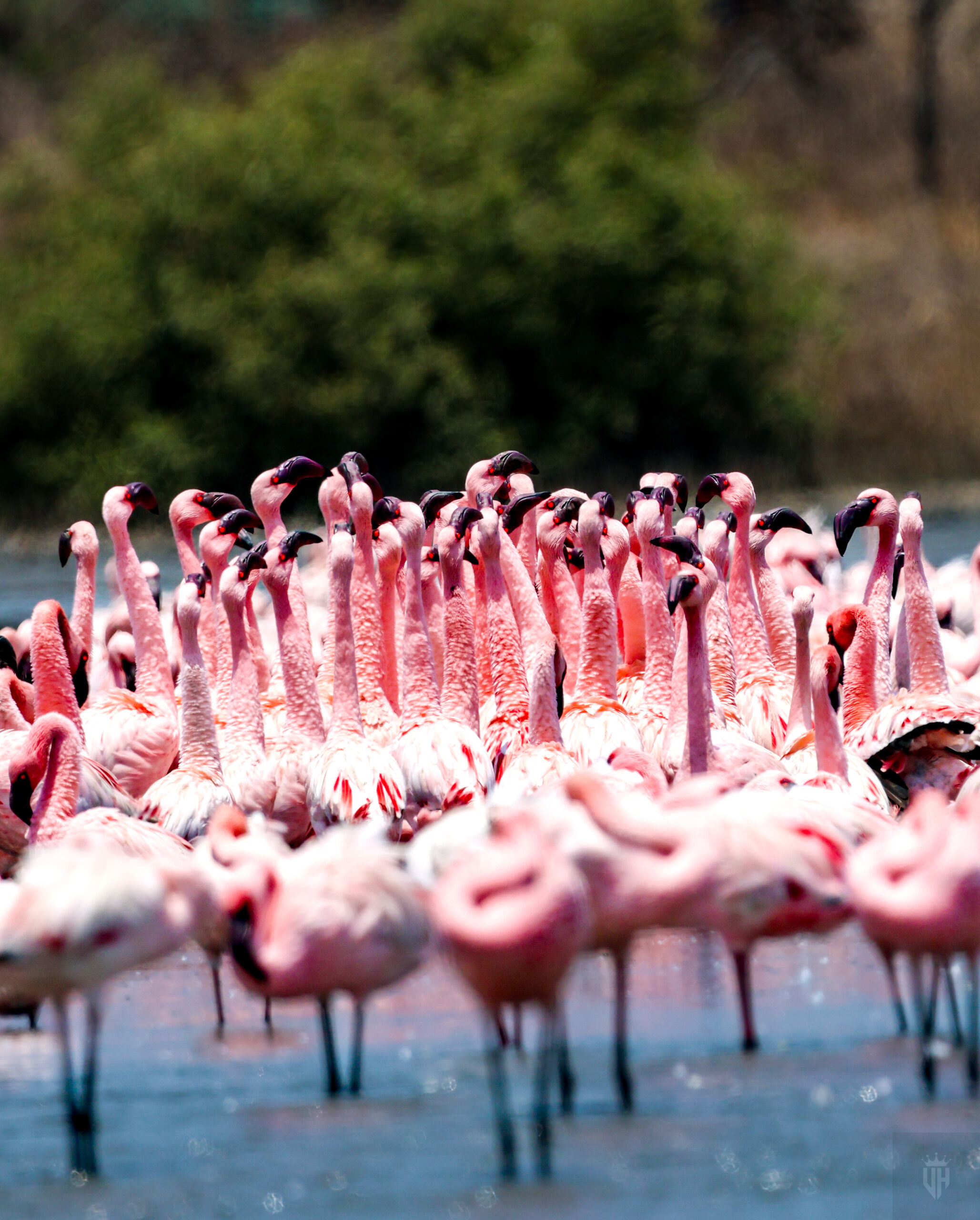
Field Identification: 80–90 cm; c. 1500–2000 g; wingspan 95–100 cm. Smallest flamingo; bill long, very dark . Female slightly smaller. Juvenile grey brown, slightly darker overall , with browner head and neck than juvenile Phoenicopterus ruber.
Distribution: Bulk of population in Rift Valley of E Africa; three further, more or less discrete populations in Namibia/Botswana/South Africa, Mauritania/Senegal and NW India/Pakistan.
Habitat: Inland saline and alkaline lakes , and also coastal lagoons . Tolerates or actively seeks out more alkaline water than Phoenicopterus ruber due to specialized diet. Breeds on extensive mudflats usually far out from shore in large lakes or pans.
Movement: Extensive movements of vast numbers of birds can occur, usually at night and often after several months at a particular lake, when local conditions become unsuitable. Seasonal migration involves displacements of up to several hundred kilometers, with large numbers moving from non-breeding areas to breeding locations when latter become suitable for nesting, e.g. when large pans flood in S Africa and India. Such movements may occur at times between populations of E & S Africa, which are not genetically distinct, and it has been suggested that they were more continuous in the past, probably due to existence of more wetlands within the two regions during what may have been wetter periods; the genetic evidence also indicates that moderate gene flow occurs between the two populations, involving a minimum of 3–4 migrants per generation, which is considered sufficient to maintain panmixia).
Irregular movements may also occur between E African and more distant W African and Indian populations, but there is little direct evidence of such movements and satellite-tracking studies have yet to provide confirmation of inter-population displacements; however, one ringed as a chick in Kenya in 1962 was found dead in Western Sahara in 1997. Numbers that occur at Senegal Delta fluctuate, but large numbers are always present there, 10,000+ at times, with a peak of 46,500 in Feb 1990. In Mauritania birds increasingly range N to Banc d’Arguin, where some 3000 non-breeders are present nearly year-round. Other large counts elsewhere in coastal W Africa—notably 13,000 at Khonibenki, Guinea, in Jan 2002—could only arise from immigration from elsewhere in Africa, given the very poor productivity of the species in W Africa, unless there are as yet undiscovered colonies in the region.
Movements occur between Mauritania, Guinea-Bissau and Guinea: a satellite-tracked individual flew 525 km overnight from Mauritania to Guinea-Bissau, from where it travelled to and from Guinea. Elsewhere in W Africa it is rare, with records from Sierra Leone, Niger, the Lake Chad region, Nigeria, Cameroon, Gabon and São Tomé & Principe. Vagrants have reached Morocco, Algeria, Tunisia, the Iberian peninsula and perhaps France. Individuals of known captive origin have been observed in the wild in France and Spain, but there are also increasingly frequent observations of what appear to be wild birds: by 2010 there were 42 accepted records for Spain and ten in Portugal, involving a minimum of 86 birds, and successful nesting occurred in Spain in 2007, 2011 and 2013, at Phoenicopterus ruber colonies. Has also been observed in Italy, Denmark, The Netherlands, Turkey, Cyprus, Israel and Egypt.
Diet and Foraging: Highly specialized: almost entirely dependent on microscopic blue green algae (Spirulina, Oscillatoria, Lyngbya) and diatoms (Navicula, Bacillariophyceae); to lesser extent small invertebrates, e.g. rotifers (Brachionus), which may partially substitute normal food in times of very low Spirulina densities in E African lakes. Usually feeds near surface in calm water , with bill only partly submerged; walks or very often swims, which is only way of reaching fair proportion of potential food supply in most lakes. Rarely feeds on bottom like Phoenicopterus ruber, possibly sifting diatoms from mud. Does not compete with P. ruber (see family introduction).
Sounds and Vocalizations: Commonest call is a low-pitched subdued murmuring “murr-err”, which can be heard continuously in large feeding flocks. Also a much higher-pitched gull-like “kwirrik” , which is often given in flight.
Breeding: Breeding is very irregular and dependent on suitable conditions at the few breeding locations, which vary considerably from year to year. It not attempted every year and may occur at different times of year at a given location. Breeding in E Africa is mainly late in dry season and during short rains. In Namibia and Botswana, breeding is apparently during dry season following high rainfall: breeding attempts there at Etosha Pan and the Makgadikgadi saltpans, in Namibia and Botswana respectively, occur every c. 3 years and succeed even less often. Breeding on Sua Pan, Makgadikgadi, has always been recorded between Dec and Apr, concurrent with wet season flooding, but large numbers of birds may remain until May and Jun since laying may occur over an extended period. Nesting in Mauritania reported at various times in spring and summer: nest-building has been seen in Jan and nests with eggs and small young have been found during Mar–Jul. Large colonies, of many thousands of pairs (up to 1,100,000), are characteristic. Clutch one egg, rarely two; incubation 28 days; chicks have whitish to dark grey down; normally fledge at 70–75 days (65–90 days). Young grow relatively slowly and continue to increase in skeletal size and mass between fledging and attainment of adult plumage at three to four years of age. Drying-up of breeding lakes in S Africa sometimes forces young chicks to walk long distances to reach water, large numbers dying on the way: rapid drying at Sua Pan, Botswana, in 2000–2001 wet season compelled chicks to walk 50 km: 3000 fledged, about one-third of those that hatched.
Conservation Status: Not globally threatened. Currently considered Near Threatened. CITES II. The most numerous flamingo but global population has declined markedly. The core population, on soda lakes of E Africa, numbers 1,500,00–2,500,000 birds, with three smaller subpopulations: 15,000–25,000 in W Africa; 55,000–65,000 in S Africa, including Madagascar; and 390,000 in S Asia, in Rann of Kutch, India/Pakistan. Highly sensitive to habitat loss or modification as the species breeds regularly at just five sites: in India, Namibia, Botswana and Tanzania, with 75% of global population breeding at L Natron, Tanzania, where proposed large-scale soda ash extraction would be disastrous if undertaken.
Other threats include land-claim, water pollution and disturbance, and there are fears that population at L Bogoria, Kenya, is suffering from malnutrition. In S Africa frequently breeds at Sua Pan, Makgadikgadi, Botswana, and less frequently at Etosha Pan, Namibia. S Asian population occurs at mostly coastal sites between Yemen and Bangladesh, and in saline wetlands of Gujarat and Rajasthan in NW India; regular breeding is reported only from several sites in Gujarat with sporadic breeding in Rajasthan. Breeding at other sites occasional or irregular, including the only breeding site in W Africa, the Senegal Delta, SW Mauritania, where breeding success has been very poor and the first young known to have fledged involved small numbers in 2010 and probably a few thousand in 2011 (due to control of predation by jackals and prevention of poaching), but the location is prone to drying up during breeding season.
Successful nesting recorded for first time in Ethiopia in 2005, at L Abijatta, where crèche of 2500–3500 chicks observed. Younger individuals especially often attempt to breed at many other sites each year, given suitable local conditions, but < 500 pairs usually involved and almost always unsuccessful. Non-breeding locations important for feeding, e.g. L Magadi, Kenya, and sites used in transit during long-distance movements are also of conservation importance. Seven birds marked at L Bogoria, Kenya, were satellite-tracked across 940 km N–S within Great Rift Valley, between L Logipi in N Kenya and Bahi Swamp in C Tanzania: their key site network comprised eight alkaline lakes (Logipi, Bogoria, Elmenteita, Nakuru, Natron , Empakai Crater Lake, Manyara and Eyasi), and L Bahi, a seasonal lake in C Tanzania.
The relevant International Single Species Action Plan principally aims to improve the conservation status from Near Threatened to Least Concern, by seeking to ensure that all major breeding and feeding sites are designated as protected areas and maintained in a good ecological condition, and that breeding colonies are not disturbed.
The species is difficult to breed in captivity, probably due to its specialized feeding habits. However, the construction of an artificial island at Kamfers Dam, Kimberley, in 2006 was successful, resulting in the first recorded breeding in South Africa and the first time that the species used an artificial structure anywhere: up to 80,000 birds have been present at the lake and they have nested in successive years, with 9000 chicks recorded in summer 2007/08 and 13,000 in 2008/09, but rising water levels and declining water quality has caused problems subsequently; the site is also threatened by building development. Some individuals are very long-lived even in the wild, with several ringing recoveries of birds > 40 years old and one found at L Baringo in 2013 had been ringed at L Magadi in 1962, 50 years and three months earlier.
del Hoyo, J., P. F. D. Boesman, E. F. J. Garcia, and G. M. Kirwan (2020). Lesser Flamingo (Phoeniconaias minor), version 1.0. In Birds of the World (J. del Hoyo, A. Elliott, J. Sargatal, D. A. Christie, and E. de Juana, Editors). Cornell Lab of Ornithology, Ithaca, NY, USA. https://doi.org/10.2173/bow.lesfla1.01